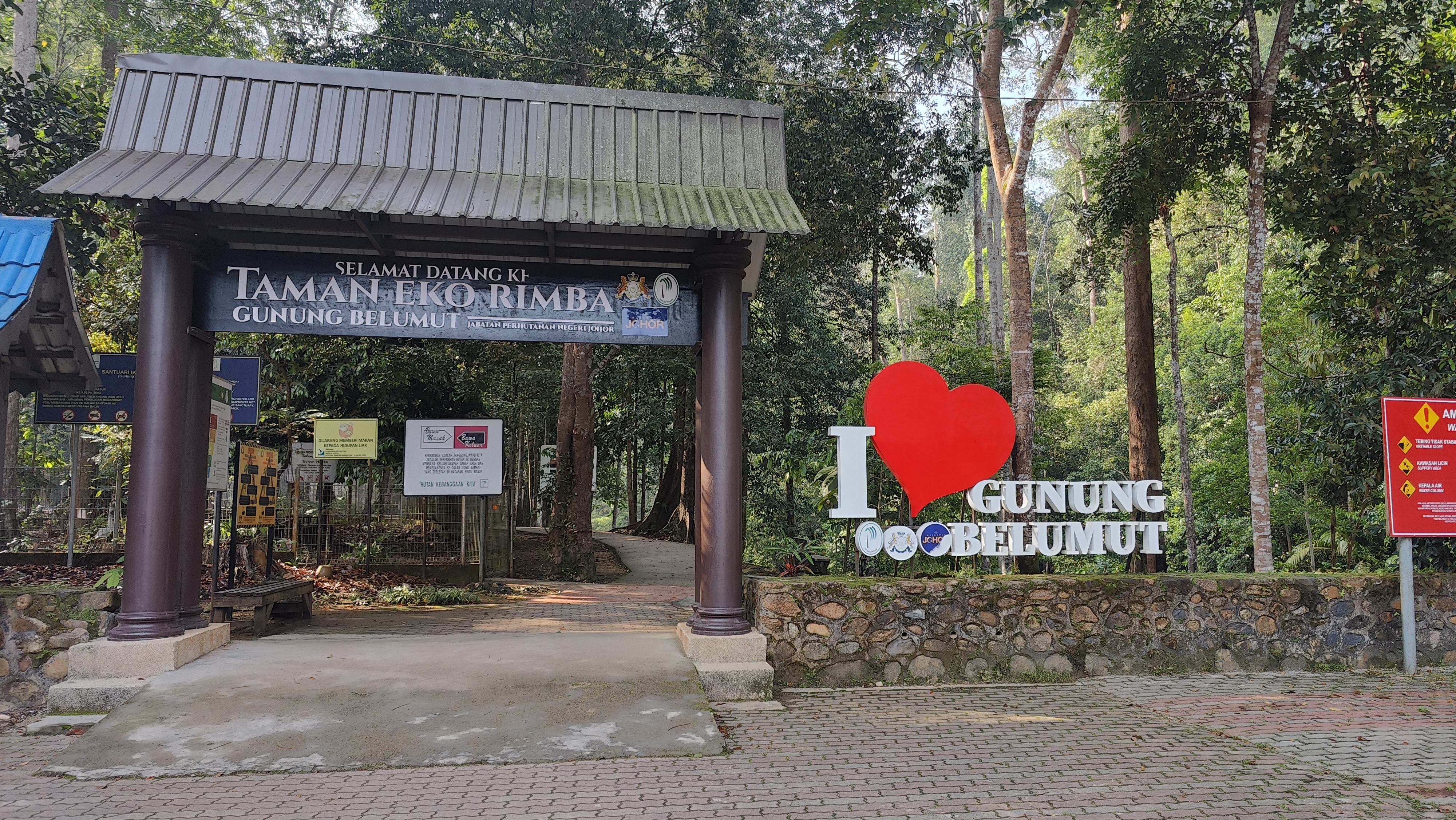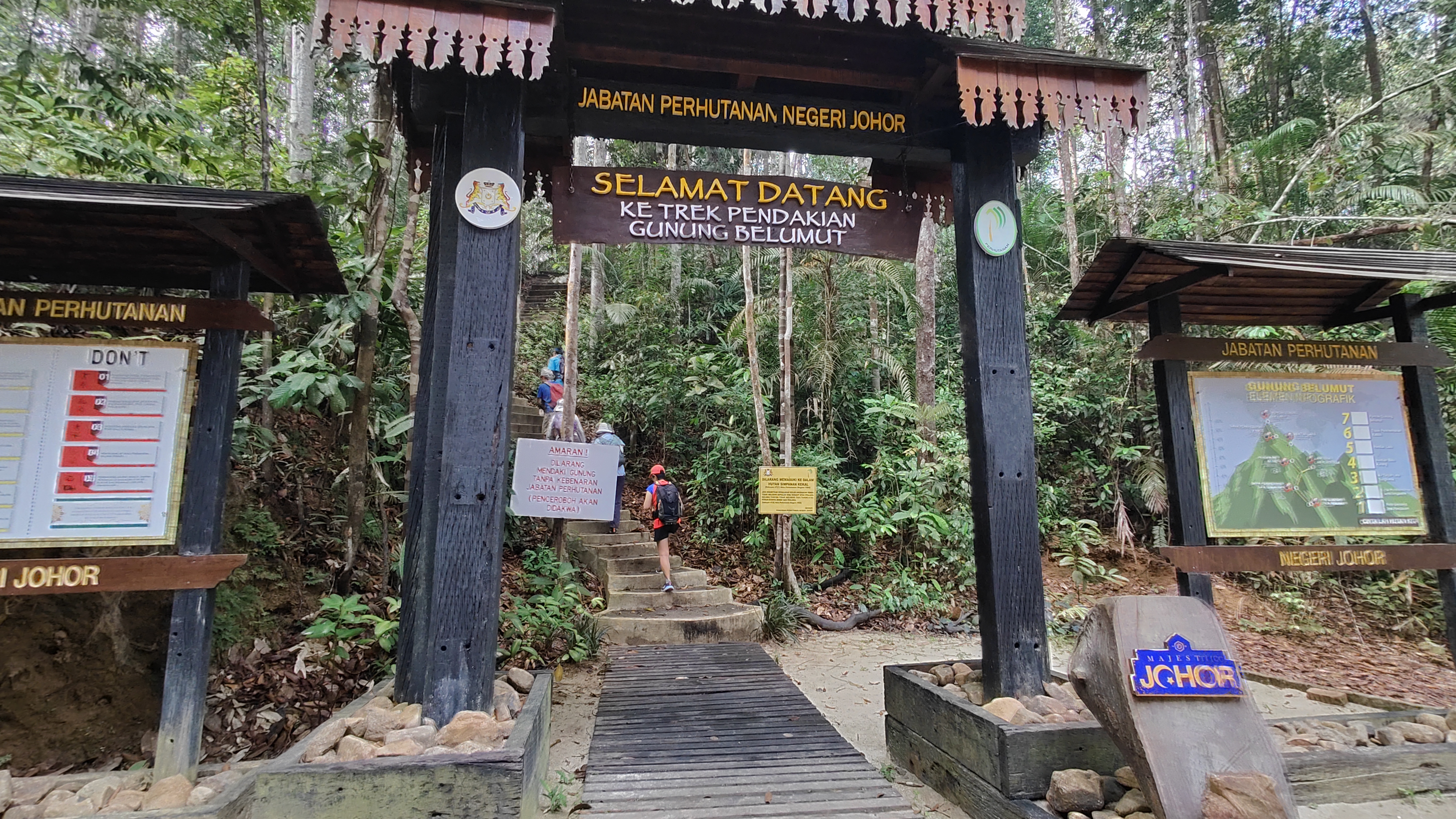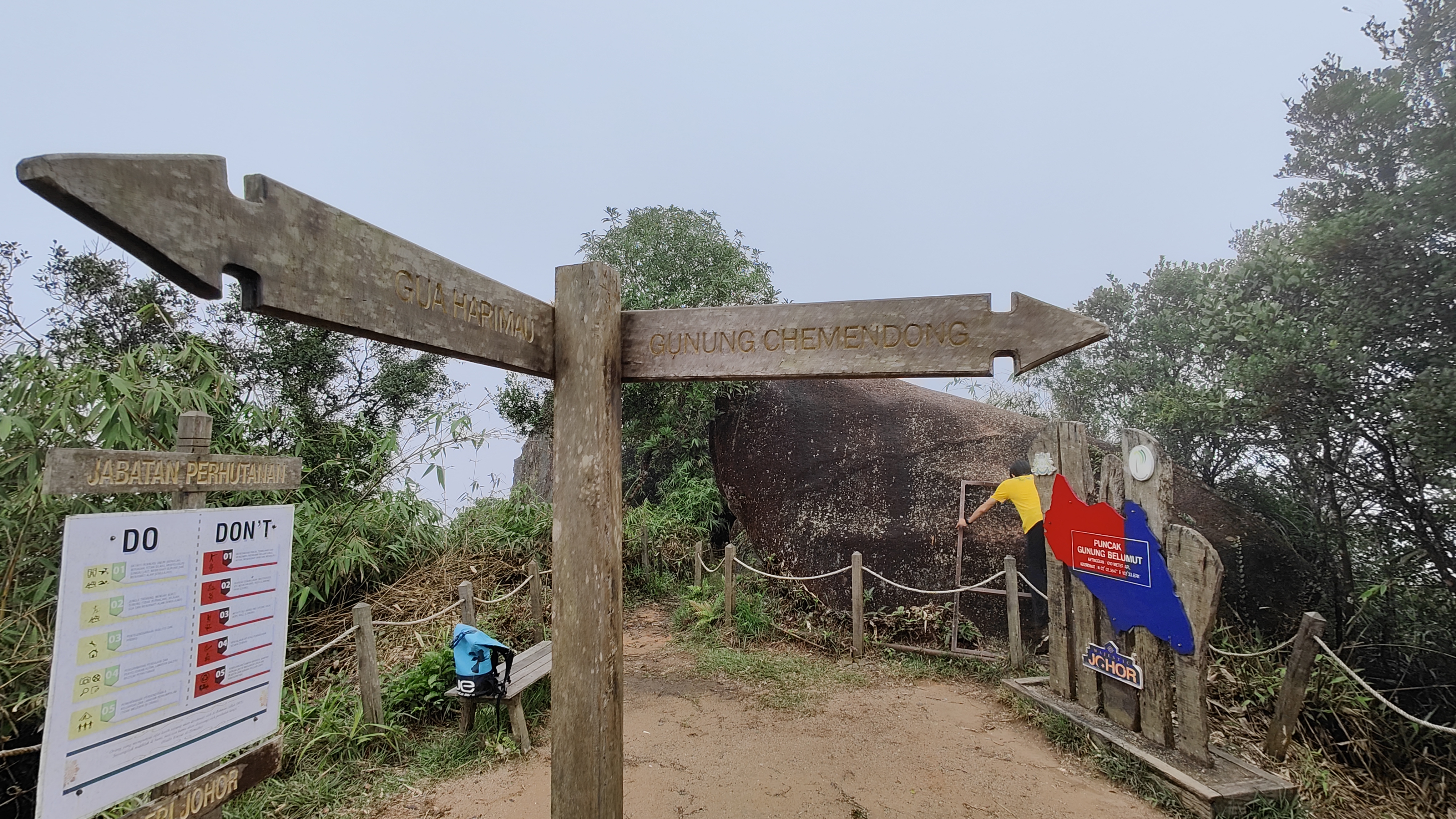

Gunung Belumut (1010m) is a moss-covered tropical rainforest peak located in the Kluang District of Johor, Malaysia. It is the third highest mountain in Johor and sits within the lush Gunung Belumut Recreational Forest. True to its name > belumut meaning “mossy” > the mountain is known for its damp, green, and beautifully rugged environment.
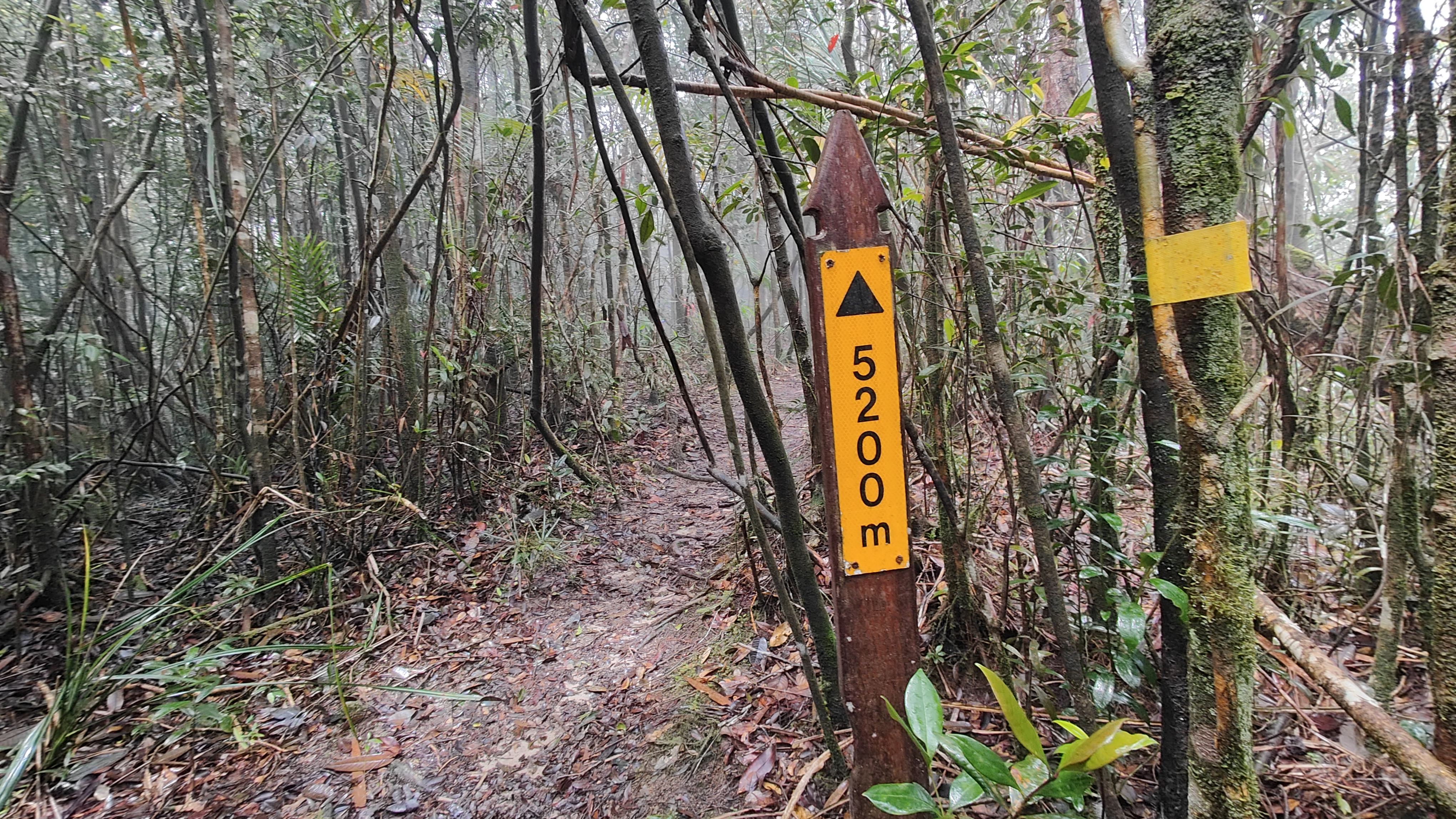
The 6 km trail to the summit takes trekkers through lowland and hill forest, passing landmarks such as Batu Kerang and the open clearing of Bukit Botak before reaching the rocky true peak marked by the distinctive Batu Keris formation. The climb typically takes 4-6 hours up and 3-4 hours down, with terrain ranging from gentle paths to steeper, muddy sections that require some scrambling.
Rich in biodiversity, Gunung Belumut is home to hornbills, babblers, reptiles, and dense rainforest vegetation. Its accessibility from Singapore and Johor Bahru, yet quieter atmosphere compared to more popular mountains making it a favourite for those seeking a genuine, less-crowded jungle trekking experience.
Applying for a permit in advance is recommended, and it is now compulsory to hire local licensed trekking guides. Basic facilities and a campsite are available at the base, the next campground is near Checkpoint 1 and can accommodate only about 3 to 4 tents. Camping also requires a permit.
Gunung Belumut is a rewarding climb that blends adventure, rainforest scenery. An ideal weekend peak for trekkers looking beyond the usual destinations.
Gunung Belumut is a moderately challenging day trek and a rewarding climb for those seeking a genuine rainforest adventure in Johor. While not as steep as some of the taller peaks in Malaysia, the trek has steep, muddy sections and occasional scrambling over rocks, making it suitable for trekkers with reasonable fitness and some prior trekking experience.
Our Belumut trek itinerary includes a day climb to the summit, followed by an overnight stay in Kluang town. The journey typically starts with a pre-dawn drive from Singapore to the trailhead, arriving early in the morning to complete pre-climb arrangements before starting the trek. After reaching the summit and enjoying the views, trekkers descend in the afternoon and travel to Kluang town for the night. Trekkers can enjoy local food, rest, and explore the town before returning to Singapore the following day.
Here is the common cut-off time for the summit trek (cut-off time, also known as turnaround time, is introduced to avoid trekking into the dark):
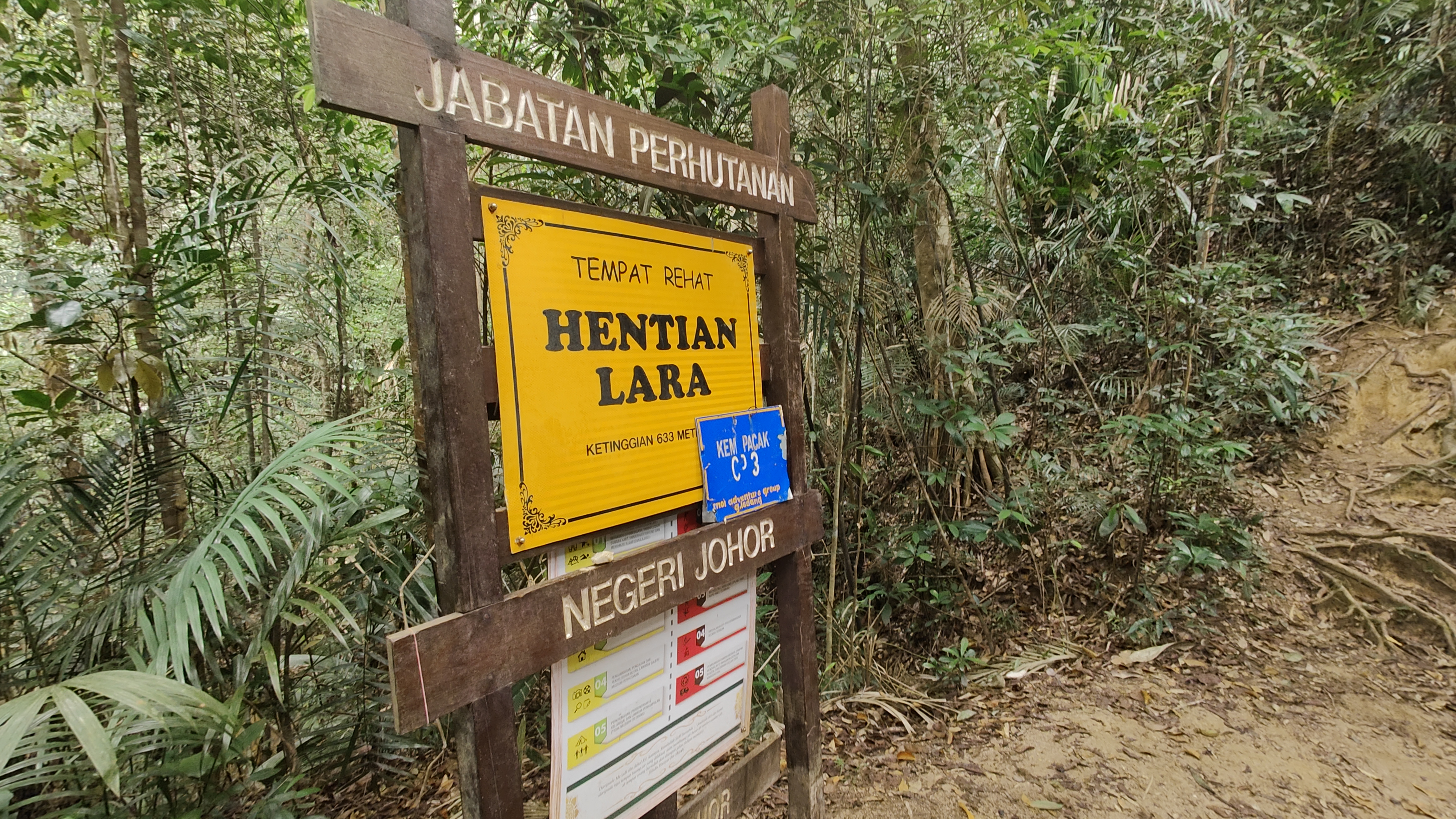
CP3 (673 m, “Lara”): 11am
Summit: No later than 1.30pm
Trekking Seasons
The ideal period to climb Gunung Belumut, as with most mountains in West Malaysia, is from March to October, when the weather is generally drier. Between December and early February, the risk of rain and adverse weather increases. Trekking activities in Gunung Belumut Recreational Forest are typically suspended from mid/late‑November onwards, particularly during the rainy and monsoon season.
This trek is graded 2A.
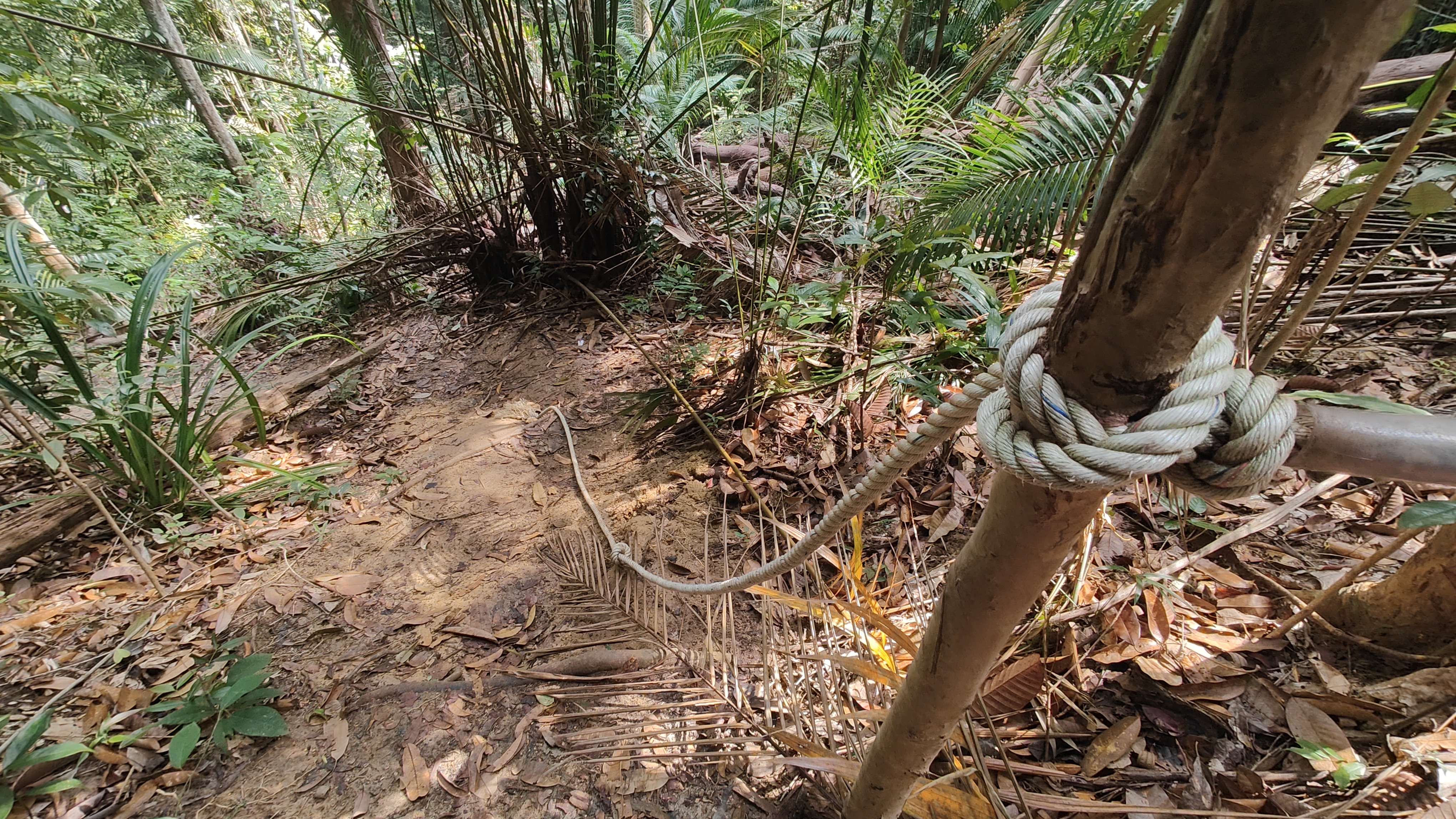
It is recommended to have prior trekking experience on mountains below 1,000 m. Trekkers will be on the trail for approximately 7-8 hours, carrying about 3-4 kg daypack over mostly steep and uneven rainforest terrain. The sections beyond CP2 (Batu Kerang) become increasingly challenging, with steep climbs, slippery mossy rocks, and occasional scrambling over boulders. Some stretches require the use of ropes which may be daunting for those with a fear of heights. While there is no official cut-off time published, guides often set conservative turnaround points to ensure safety and to prevent trekkers from being caught on the mountain after dark.
You can wear a quick dry t-shirt, sports shorts/tights or trekking pants and trail shoes. Bring rain gear and waterproof your daypack. A pair of gloves can be useful too.
| DAY | DESCRIPTION |
| 1 |
5.00am: Meet Up. Board vehicle to Malaysia * there will be no breakfast stop, please bring your own food 7.30am-8am: Arrive at foothill, meet local guides, registration & start trek to summit. 12.30pm-1.30pm: Arrive summit. After a quick lunch (pack your own lunch) and photo taking at the summit, start to descend to the foothill. (The turn around time is 11am at CP3) 5pm-6pm: Arrive at foothill. Change / wash up. Board vehicle for Kluang. Overnight: Hotel in Kluang |
| 2 |
Free & easy in Kluang. Check out by 12 noon 1pm: Board vehicle and transfer back to Singapore. Enroute to stop for some light shopping and refreshments. 8pm-9pm: Arrive in Singapore. |
Note: All meals on your own
| DATES | PRICE |
| Sat, 18 Apr – Sun, 19 Apr 2026 | $250 (SGD) / person |
1. Trip information kit
2. Complimentary group training sessions
No visa is required for a stay of less than one month for nationals of all ASEAN countries except Myanmar. For a stay exceeding one month a visa will be required, except for nationals from Brunei and Singapore.
Nationals or passport holders of the following countries require a visa to enter Malaysia.
|
Duration |
Countries |
|
30 days |
Bangladesh, Bhutan, China, India, Montenegro, Nepal, North Korea, Pakistan, Serbia, Sri Lanka, UN-Titre De Voyage, UN-Laisser Passer |
|
14 days |
Afghanistan, Angola*, Burkina Faso*, Myanmar, Burundi, Cameroon*, Central African Republic*, Colombia, Congo Brazzaville*, Congo Democratic Republic*, Djibouti*, Equatorial Guinea*, Eritrea*, Ethiopia*, Ghana*, Guinea-Bissau*, Hong Kong (COI), Ivory Coast*, Liberia*, Mali*, Mozambique*, Niger*, Nigeria*, Rwanda*, Western Sahara* |
|
Prohibited |
Israel |
* Entry by air only
For latest updates and details of visa application, please visit https://www.malaysia.gov.my/portal/subcategory/1543.
In Malaysia, there are moneychangers located at the airport terminals, in shopping malls and shops in the city centres, as well as major rest stops along the North-South Highway in Peninsula Malaysia. You can also change money at the banks and hotels. The rates at the moneychangers tend to be better than those offered in the hotels and banks. It is best to change money in the city, prior to travelling to the National Parks or remote areas where there is likely no moneychanger or bank; or the exchange rates offered by the hotels tend to be high. Double count your money before leaving the moneychangers to make sure the accurate amount is given.
Credit cards, such as Visa and Mastercard, are readily accepted by hotels, major stores and restaurants in the cities and the major tourist areas. The smaller and local establishments typically accept only cash payment. ATMs are widespread in the city and some town areas and accept the common network such as Visa, Mastercard, Plus, Cirrus, etc.
Malaysian Tourism Tax (TTx)
Effective from 1 September 2017, foreign tourists staying at paid accommodation in Malaysia are subject to pay a Tourism Tax of RM10 per room per night. This flat rate of RM10 will be applicable for all room types, based on per room per night. Collection of this tax will be payable to the hotel/lodge directly. Under the Tourism Tax (Exemption) Order 2017, Malaysians or Permanent Residents with MyPR cards are exempted. The TTx is mandatory and regulated by the Ministry of Finance and the Royal Malaysian Customs Department.
Malaysia’s electricity is 240 Volt and 50 MHZ. The electric plug is the rectangular blade plug or Type G, used in the UK.
The official language in Malaysia is Bahasa Melayu, although many Malaysians speak several languages and will use them all in general conversation. English is a compulsory subject in all schools and is widely understood, especially those working in the tourist industry like the tourist guides and hotel staff.
It is strictly not recommended to drink water straight from the tap. You should boil the water before you drink it or buy bottled water. Bottles of mineral water can be easily purchased in hotels, restaurants, supermarkets and petrol kiosks in Malaysia. Many hotels also provide a small bottle of complimentary mineral water per day to each guest.
Giving a tip to tour guides is a common practice in Malaysia but other service staff in hotels, restaurants and taxi drivers in general do not expect a tip from tourists. Service charge of 10% is included in hotels and most restaurants.
With evolving world situations that may occur unexpectedly due to natural disasters, pandemics/epidemics, conflicts and unrests, it is best to read up and keep tabs on news and developments at your destination country and region before the trip. Check on the country’s official website and/or your own foreign ministry website for any travel advisory or safety precautions to be taken while abroad.
As with traveling in anywhere in the world, regardless of the local crime rate, stay vigilant and take care of personal safety. Good to read up on any possible exposure in the country prior to departure.
It is a good practice to register with your respective foreign ministry if there is such a service provided to citizens, to contact you in order to make sure that you are safe and, if need be, assist you should an emergency (e.g. natural disasters, civil unrest, etc.) occur when you are overseas.
For Singaporeans, this is the link to the Ministry of Foreign Affairs’ eRegister:
https://eregister.mfa.gov.sg/eregisterportal/common/preLoginEregisterView.action.
It is highly recommended to purchase comprehensive travel insurance(s), upon payment of your trip, to cover adverse situations that may occur while you are overseas or even before departure. Ensure that the coverage is suitable for your destination and the activities that you are participating in. Be familiar with the terms and conditions before purchasing and travelling abroad.
There is no compulsory vaccine to be taken to enter Malaysia. You should, however, be up to date on routine vaccinations, especially vaccines against water-borne, food-borne, parasitic and other infectious diseases (examples: hepatitis, typhoid and tuberculosis) while traveling to any destination. You are encouraged to consider having vaccinations before you travel. At least eight weeks before you depart, make an appointment with your doctor or travel clinic for a basic health check-up, and to discuss your travel plans and any implications for your health, particularly if you have an existing medical condition.
Recommended routine vaccinations for travellers in general:
|
Hepatitis A |
Spread through consuming contaminated food and water or person to person through the faecal-oral route. Risk is higher where personal hygiene and sanitation are poor. |
|
Hepatitis B |
Spread through infected blood and blood products, contaminated needles and medical instruments and sexual intercourse. Risk is higher for those at occupational risk, long stays or frequent travel, children (exposed through cuts and scratches) and individuals who may need, or request, surgical procedures abroad. |
|
Rabies
|
Spread through the saliva of an infected animal, usually through a bite, scratch or lick on broken skin. Particularly dogs and related species, but also bats. Risk is higher for those going to remote areas (who may not be able to promptly access appropriate treatment in the event of a bite), long stays, those at higher risk of contact with animals and bats, and children. Even when pre-exposure vaccine has been received, urgent medical advice should be sought after any animal or bat bite. |
|
Tetanus
|
Spread through contamination of cuts, burns and wounds with tetanus spores. Spores are found in soil worldwide. A primary series of 5 doses of tetanus vaccine is recommended for life. Boosters are usually recommended in a country or situation where the correct treatment of an injury may not be readily available. |
|
Typhoid Fever |
Spread mainly through consumption of contaminated food and drink. Risk is higher where access to adequate sanitation and safe water is limited. |
|
Influenza |
A vaccine specific for a given year to protect against the highly variable influenza virus. |
For more information and professional advice on travel vaccinations, please consult your doctor or travel clinic.
For people residing in Singapore, you may visit The Travellers’ Health and Vaccination Clinic (THVC) at Tan Tock Seng Hospital:
Travellers’ Health & Vaccination Clinic
Address: Level 4, Clinic 4B, Tan Tock Seng Hospital Medical Centre
Contact number: 6357 2222
Website : https://www.ttsh.com.sg/Patients-and-Visitors/Medical-Services/Travellers-Health-and-Vaccination-Clinic/Pages/default.aspx.
Malaysia’s climate is equatorial and tropical, meaning it is generally hot and sunny all year round. Mosquito & insect bites and sunburn are typical health concerns in such a tropical place, particularly for those who stay outdoors for long hours.
Mosquito and insect bites are common in the lowland areas in Malaysia, especially in the jungle. Apart from acting as carriers of disease, mosquito & insect bites can result in unpleasant and occasionally serious skin reactions. You are advised to take measures to avoid mosquito and insect bites, including using an insect repellent at all times and wearing long, loose fitting, light coloured clothing in the evenings. Some simple ways to minimisation of exposure to mosquitoes: