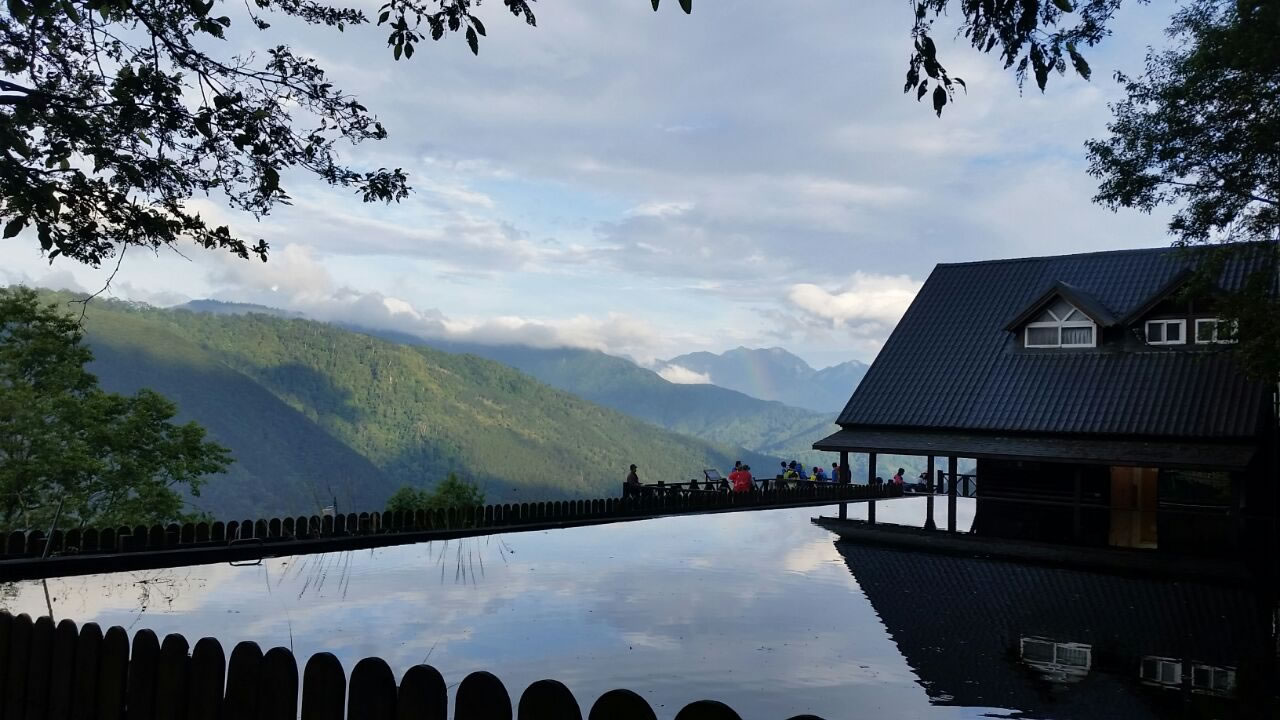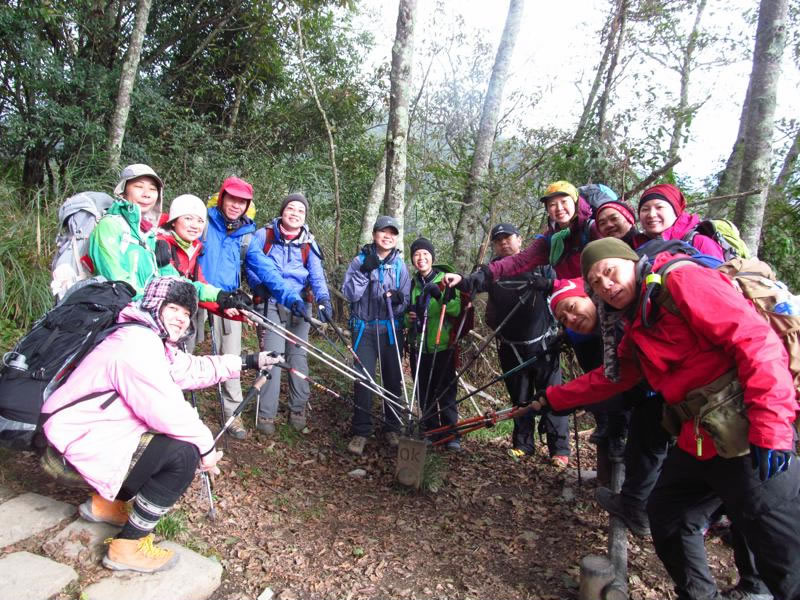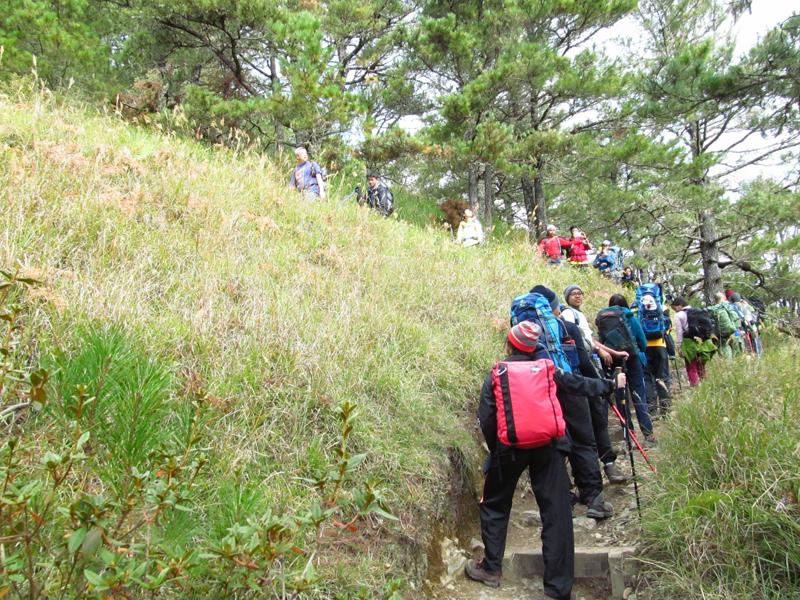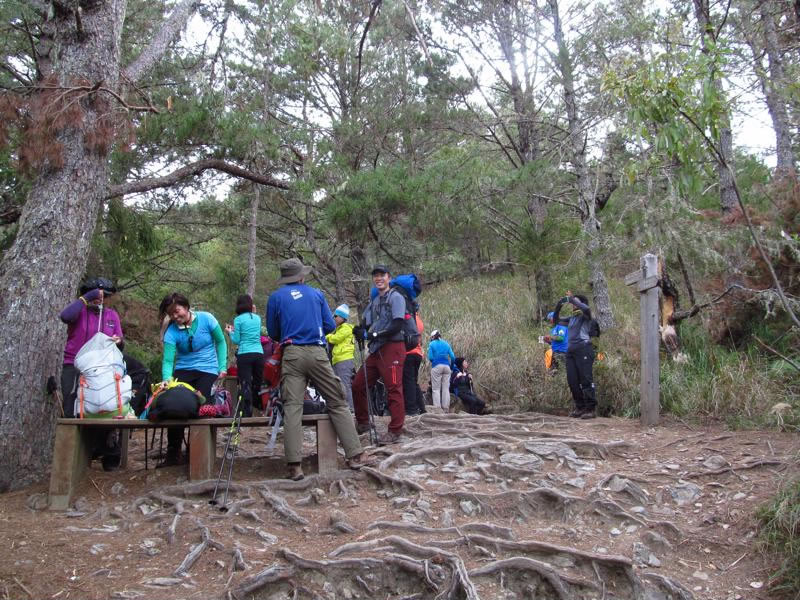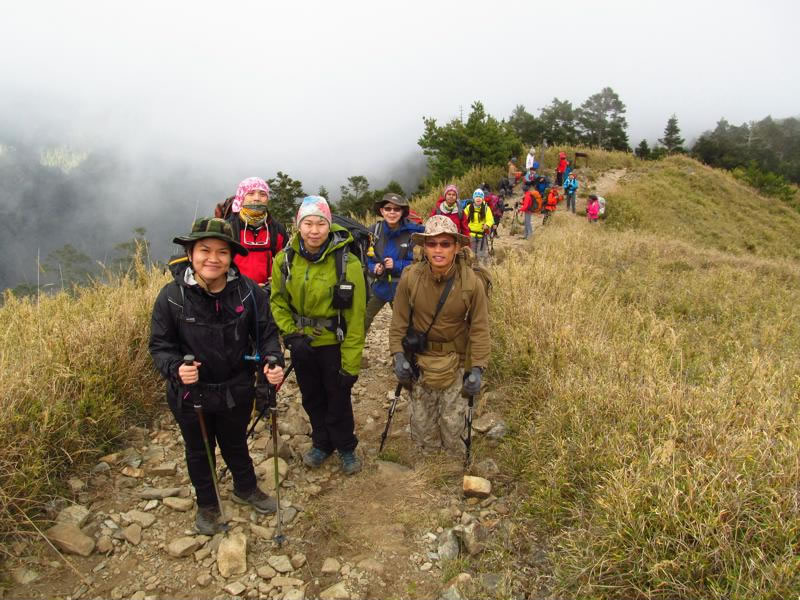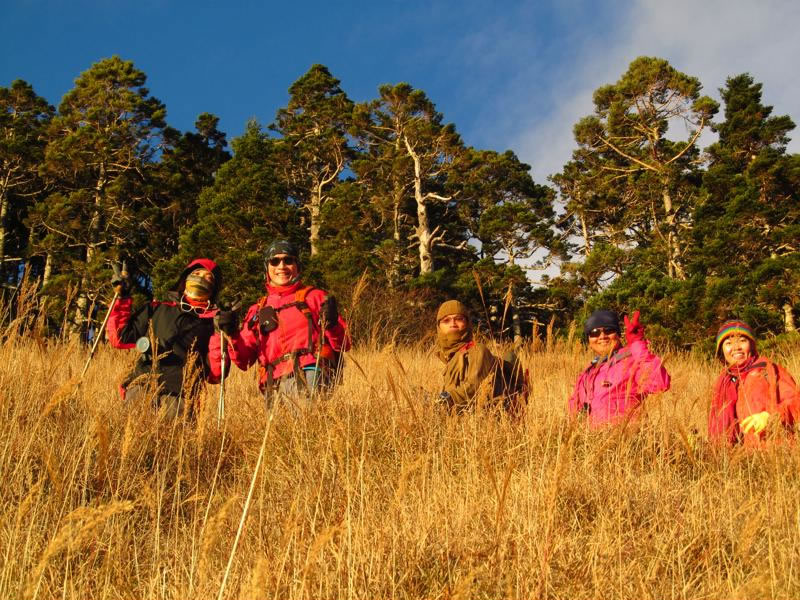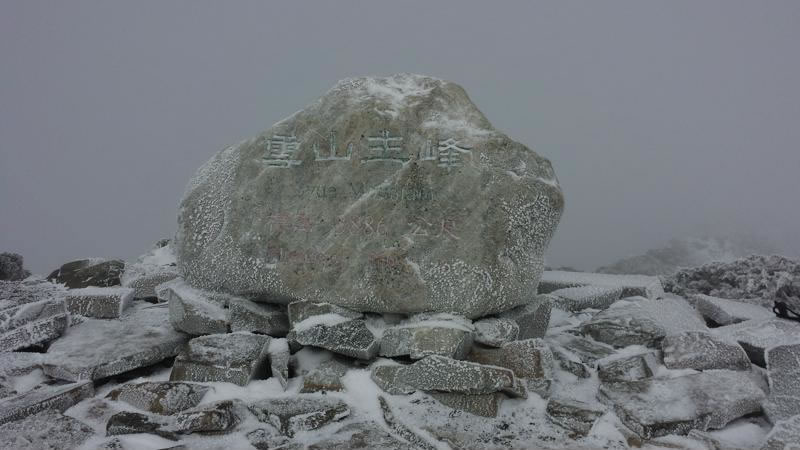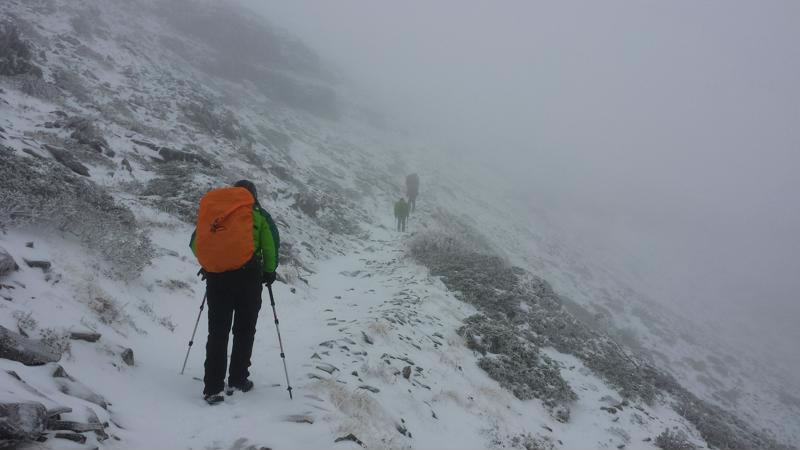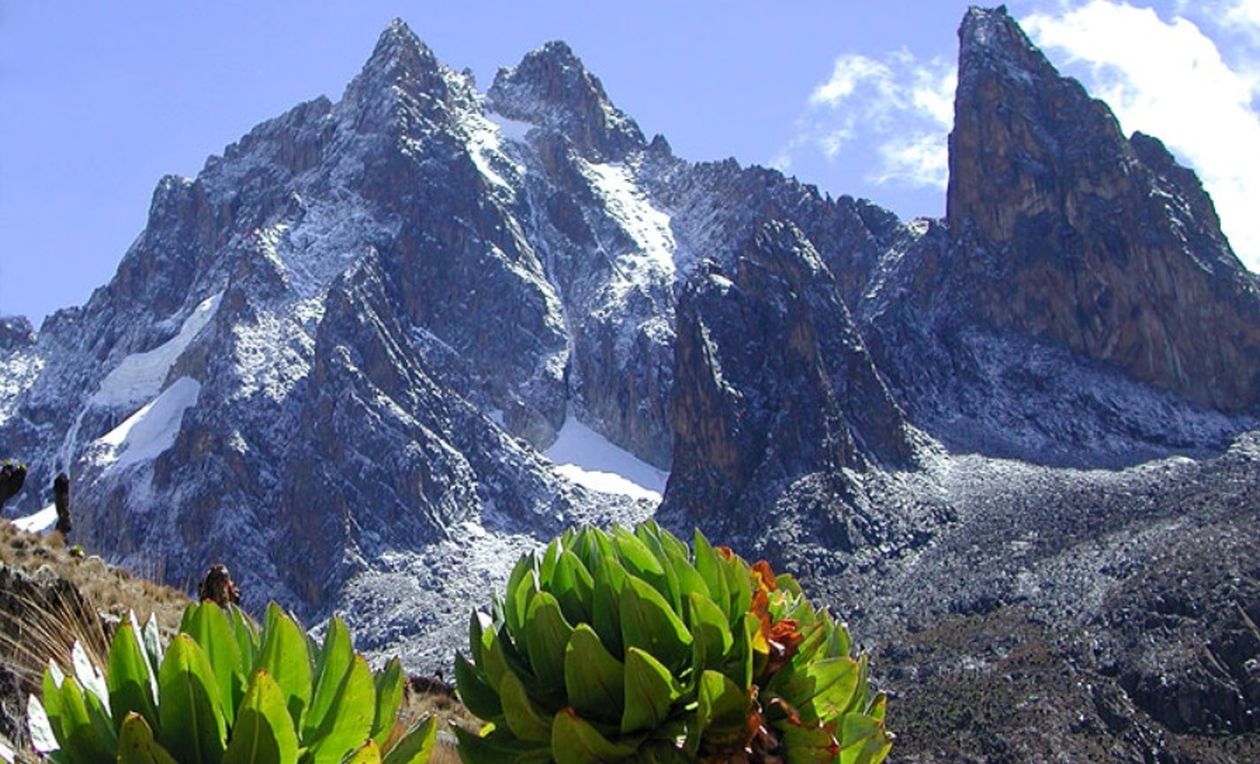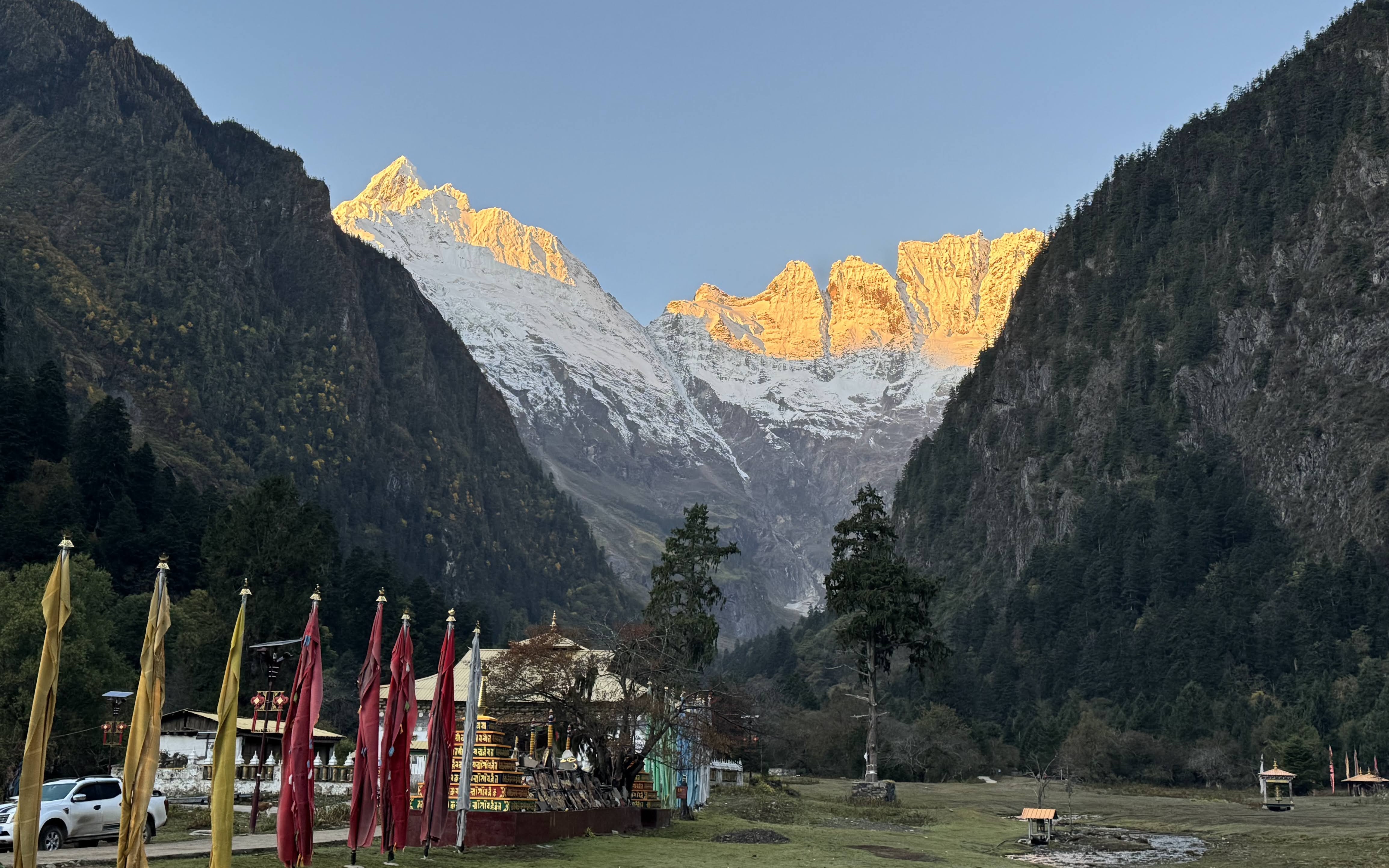

Rising to 3,886 m, Xueshan (Snow Mountain) is Taiwan’s second-highest peak and one of the most scenic climbs in East Asia. The trail offers a rich variety of landscapes; from tranquil pine forests to high alpine ridgelines, rewards trekkers with sweeping views across the central mountain range.
The vast Shei-Pa National Park is well known for some of Taiwan’s most challenging treks along its six principle ridges: Main Ridge, South Ridge, North Ridge, Northeast Ridge, Southeast Ridge, East Branch Ridge.
One of the most famous ridge treks is the Holy Ridge Trail, which connects the North Ridge to the Main Ridge. Majority of the ridge treks are challenging and difficult and not for beginners or those who are unfit.
Most trekkers skip the challenging ridge treks and head for the main trail near Wuling Farm to trek to Xueshan Main Peak. To cater to a broad level of fitness and higher chances of reaching the summit, our Xueshan climb is a 3-day trek on the main trail via Wuling Farm.
3-day Xueshan Main Peak Trek
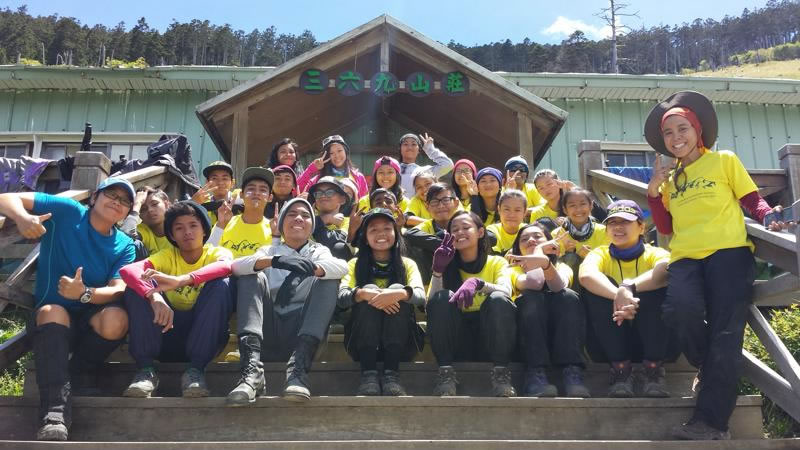
With the 369 Cabin currently under reconstruction, we will stay in Qika Cabin and camp at the designated temporary campsite near 3,000 m.
Day 1 – Qika Cabin (2,460 m)
The trek begins with a gentle 2 km ascent through pristine pine forests to Qika Cabin at 2,460 m. This first section offers an easy start, surrounded by cool alpine air and lush forest scenery.
Day 2 – Temporary Campsite (3,000 m)
From Qika Cabin, the trail opens up to sweeping views of Nanhudashan (南湖大山) and the Hehuanshan (合欢山) range. The path becomes steeper, winding up a series of tough switchbacks – the most famous being the “Crying Slope.” Along the way, Xueshan East Peak offers a rewarding side hike for those with time and energy. We will camp at the temporary campsite near 3,000 m for the night.
Day 3 – Summit Day & Descent
A long and rewarding day begins before dawn. The climb to the main summit (3.7km / 3–4 hours) passes through the dense fir-covered Black Forest before opening into a vast glacial cirque; a reminder of Snow Mountain’s icy past. From the cirque, it is a final 1 km push to the summit for breathtaking panoramic views. After the climb, we will return to the campsite to pack up, descend to the trailhead, and spend the night at Wuling Farm.
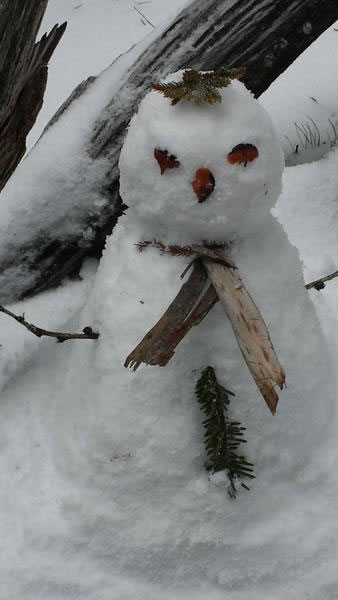
It is possible to trek in Taiwan all year round. However, it is advisable to avoid the typhoon season from July to September. The trails are typically closed during and after a typhoon. Mid-May to June is the Plum Rain season which sees afternoon thunderstorms. In winter to early spring from late December to March, there is usually ice and snow on the trails, making the climb much more challenging. Crampons or snow cleats will be required when there is ice and snow.
The popular trekking seasons are:
This trek is graded 2B.
Good to have below 3000m trekking experience. You will be trekking for 2-3 days from the trailhead to the summit and back, with a 6-7kg backpack load. At times, when there is a dry spell and water is not available in the mountain hut, you will be expected to carry drinking water for the 2/3 days trek, which can increase the backpack load to 8-10kg. Though hiring of porters is possible, the cost is high (about S$250/day/porter). Therefore, it is more realistic to train and be prepared to carry your own load.
Snow and ice can be expected during the winter months till early spring. There may be a need to use crampons or snow cleats. Permits are only granted to trekkers with trekking experience to 3000m and above for January to March.
You can wear long trekking pants with a quick dry t-shirt or trekking shirt (in spring or autumn) and a light weight thermal top (in winter) for the trek to 369 Cabin. In the evening and for the summit trek, a thermal set, an insulating layer (such as a fleece jacket and/or a light weight down jacket) and an outer shell jacket are needed. Bring rain gear and waterproof your backpack. A down sleeping bag is also needed and provided.
A packing list will be provided to all our participants. Please refer to our Resource Centre page for information on the layering system and how to choose the right gear/equipment for your trek.
Our new 6-day Xueshan itinerary begins with a night in JiaoXi before the trek starts, allowing time to rest and prepare for the climb. During the trek, we will stay one night at Qika Cabin and another at the temporary campsite. Summit day will be a long but rewarding one, as the trek continues from the summit all the way down to the trailhead in a single day. We will spend the final night at Wuling Farm, giving ample time for a comfortable descent without the rush to return to Taipei.
| Day | Description | Meals |
| 1 | Arrive in Taipei. Transfer to JiaoXi (280m). O/N Hotel | -/-/D |
| 2 | Transfer to trailhead (2140m). Trek to Cika Cabin (2460m). O/N Dormitory Hut | B/L/D |
| 3 | Trek to Campsite (3000m). O/N Tent (Single tent) | B/L/D |
| 4 | Summit Trek (Xueshan Main Peak, 3886m) Descend to trailhead – transfer to Wuling Farm. O/N Hotel |
B/L/D |
| 5 | Transfer to Taipei (10m). O/N Hotel | B/-/- |
| 6 | Depart Taipei | B/-/- |
It is possible to trek Xueshan with a 4 or 5-day itinerary. On the first day of the trek, you will make your way to the temporary campsite to rest, skipping Cika Cabin. Summit day will also be a long but rewarding day. To avoid traveling by car after sunset, it’s important to arrive at the trailhead before 3pm. If this is not feasible, we recommend spending the night at Wuling Farm and taking a morning drive back to Taipei.
This itinerary is best suited for trekkers who are comfortable with high-altitude trekking and possess good fitness and stamina.
| Day | Description | Meals |
| 1 | Arrive in Taipei. Transfer to Yilan (400m). O/N Hotel | -/-/D |
| 2 | Transfer to trailhead (2140m). Trek to Campsite (3000m). O/N Tent (Single tent) | B/L/D |
| 3 | Summit Trek (Xueshan Main Peak, 3886m) Descend to trailhead – transfer to Wuling Farm. O/N Hotel Note: If you plan to travel back to Taipei the same day (a 4–5 hour drive), you must arrive at the trailhead before 3pm |
B/L/D |
| 4 | Transfer to Taipei (10m). O/N Hotel | B/-/- |
| 5 | Depart Taipei | B/-/- |
| DATES (6D Itinerary) | PRICE |
| – | $- (SGD) / person |
Group size: Minimum 6 people
4D and 5D trek package prices (TBC):
| DURATION | 2 PEOPLE | 3 PEOPLE | 4 PEOPLE | 5 PEOPLE | 6-16 PEOPLE |
| 4 Days | $1450 (SGD) / person | $1120(SGD) / person | $950 (SGD) / person | $840 (SGD) / person | $750 (SGD) / person |
| 5 Days | $1680 (SGD) / person | $1275 (SGD) / person | $1085 (SGD) / person | $980 (SGD) / person | $880 (SGD) / person |
You can also form a private group for this trek. For enquiry, send an email to us at [email protected].
NOTE: For groups with scheduled trek dates that start on a Wednesday or Saturday, there is an additional fee of $25 per person. This additional fee is due to the higher weekend hotel rate.
1. Trip briefing and information kit
2. Gear list
3. Complimentary group training sessions
We carefully select and establish strong working relationship with our local trek operator to ensure safe participation by everyone. Our local climbing guides have extensive experience in guiding treks in Taiwan, possess intimate knowledge of the local surroundings, conditions and culture and are trained in wilderness 1st aid and emergency rescue.
Holders of ordinary passports issued by the following countries do not need a visa to enter Taiwan as long as their trip does not last longer than the visa-free period listed below.
|
Duration |
Countries |
|
90 days |
Andorra, Australia* (effective till December 31, 2020), Austria, Belgium, Bulgaria, Canada, Chile, Croatia, Cyprus, Czech Republic, Denmark, Estonia, Eswatini*, Finland, France, Germany, Greece, Guatemala, Haiti, Honduras*, Hungary, Iceland, Ireland, Israel, Italy, Japan*, Republic of Korea, Latvia, Liechtenstein, Lithuania, Luxembourg, Malta, Marshall Island*, Monaco, Netherlands, New Zealand, Nicaragua, North Macedonia*(effective till March 31, 2025), Norway, Palau, Paraguay, Poland, Portugal, Romania, San Marino, Slovakia, Slovenia, Spain, Sweden, Switzerland, Tuvalu*, the United Kingdom, the United States of America*,and Vatican City State. |
|
30 days |
Singapore, Malaysia, Belize*, Dominican Republic, Nauru*, St. Kitts and Nevis*, St. Lucia*, St. Vincent and the Grenadines |
|
14 days |
Brunei, Thailand and Philippines (to 31 July 2020) |
For latest updates and details of visa application, please visit http://www.boca.gov.tw.
Moneychangers do not proliferate in Taiwan like they do elsewhere. Hotels will change money for their guests, but banks are the most common option. For conveniences, change your currency at your local moneychangers (if the rates are relatively reasonable) or at the airport, when you arrive in Taiwan. ATMs are widely available at banks and convenience stores using the Plus and Cirrus networks, but may be subjected to daily or per transaction withdrawal limits.
Credit cards are widely accepted in most hotels, major retail outlets and mid-range to top-end restaurants/cafes. Small local retail or food stalls, like those in the night markets are highly unlikely to take credit cards.
In Taiwan the standard voltage is 110 V. The standard frequency is 60 Hz. The power sockets that are used are of Type A which has two flat parallel pins or Type B which has two flat parallel pins and a round grounding pin.
The official language of Taiwan is Mandarin. Mandarin is the language of instruction in Taiwan’s schools, and most radio and TV programs are broadcast in the official language as well.
Aside from Mandarin, 70% of the population who are ethnic Hoklo speak the Hokkien dialect of Min Nan (Southern Min) Chinese as their mother tongue. The aboriginal Taiwanese have their own languages too. Some elderly Taiwanese speak Japanese, learned in school during the Japanese occupation (1895-1945).
While majority of Taiwanese speak both their mother tongue and Mandarin fluently, most of them are unable to speak nor understand the English language, except some in the tourism industry or high-end hotels and restaurants.
Water and ice served in restaurants are usually filtered tap water, which is generally safe. Water fountains in Taiwan always incorporate filters, and they can be found in practically every lodge or hotel as well as (for e.g.) larger museums and Taipei MRT stations. You can refill and reuse your bottles at these fountains. If you cannot find one or have a sensitive stomach and have no alternative to boiled water, buying bottled water is the best option. Never drink directly from the tap.
Tipping is generally not practiced in Taiwan. Tipping in hotels is also not expected, with the bellman or porter being the exception. You should plan on tipping the hotel porter US$1 per bag and perhaps a little more at a higher end hotel. Full service restaurants typically impose a service charge and that is usually considered to be sufficient. Tipping is also not expected in taxis and drivers would usually return your change to the last dollar.
With evolving world situations that may occur unexpectedly due to natural disasters, pandemics/epidemics, conflicts and unrests, it is best to read up and keep tabs on news and developments at your destination country and region before the trip. Check on the country’s official website and/or your own foreign ministry website for any travel advisory or safety precautions to be taken while abroad.
As with traveling in anywhere in the world, regardless of the local crime rate, stay vigilant and take care of personal safety. Good to read up on any possible exposure in the country prior to departure.
It is a good practice to register with your respective foreign ministry if there is such a service provided to citizens, to contact you in order to make sure that you are safe and, if need be, assist you should an emergency (e.g. natural disasters, civil unrest, etc.) occur when you are overseas.
For Singaporeans, this is the link to the Ministry of Foreign Affairs’ eRegister:
https://eregister.mfa.gov.sg/eregisterportal/common/preLoginEregisterView.action.
It is highly recommended to purchase comprehensive travel insurance(s), upon payment of your trip, to cover adverse situations that may occur while you are overseas or even before departure. Ensure that the coverage is suitable for your destination and the activities that you are participating in. Be familiar with the terms and conditions before purchasing and travelling abroad.
There is no compulsory vaccine to be taken to enter Taiwan. You should, however, be up to date on routine vaccinations, especially vaccines against water-borne, food-borne, parasitic and other infectious diseases (examples: hepatitis, typhoid and tuberculosis) while traveling to any destination. You are encouraged to consider having vaccinations before you travel. At least eight weeks before you depart, make an appointment with your doctor or travel clinic for a basic health check-up, and to discuss your travel plans and any implications for your health, particularly if you have an existing medical condition.
Recommended routine vaccinations for travellers in general:
|
Hepatitis A |
Spread through consuming contaminated food and water or person to person through the faecal-oral route. Risk is higher where personal hygiene and sanitation are poor. |
|
Hepatitis B |
Spread through infected blood and blood products, contaminated needles and medical instruments and sexual intercourse. Risk is higher for those at occupational risk, long stays or frequent travel, children (exposed through cuts and scratches) and individuals who may need, or request, surgical procedures abroad. |
|
Rabies
|
Spread through the saliva of an infected animal, usually through a bite, scratch or lick on broken skin. Particularly dogs and related species, but also bats. Risk is higher for those going to remote areas (who may not be able to promptly access appropriate treatment in the event of a bite), long stays, those at higher risk of contact with animals and bats, and children. Even when pre-exposure vaccine has been received, urgent medical advice should be sought after any animal or bat bite. |
|
Tetanus
|
Spread through contamination of cuts, burns and wounds with tetanus spores. Spores are found in soil worldwide. A primary series of 5 doses of tetanus vaccine is recommended for life. Boosters are usually recommended in a country or situation where the correct treatment of an injury may not be readily available. |
|
Typhoid Fever |
Spread mainly through consumption of contaminated food and drink. Risk is higher where access to adequate sanitation and safe water is limited. |
|
Influenza |
A vaccine specific for a given year to protect against the highly variable influenza virus. |
For more information and professional advice on travel vaccinations, please consult your doctor or travel clinic.
For people residing in Singapore, you may visit The Travellers’ Health and Vaccination Clinic (THVC) at Tan Tock Seng Hospital:
Travellers’ Health & Vaccination Clinic
Address: Level 4, Clinic 4B, Tan Tock Seng Hospital Medical Centre
Contact number: 6357 2222
Website : https://www.ttsh.com.sg/Patients-and-Visitors/Medical-Services/Travellers-Health-and-Vaccination-Clinic/Pages/default.aspx.