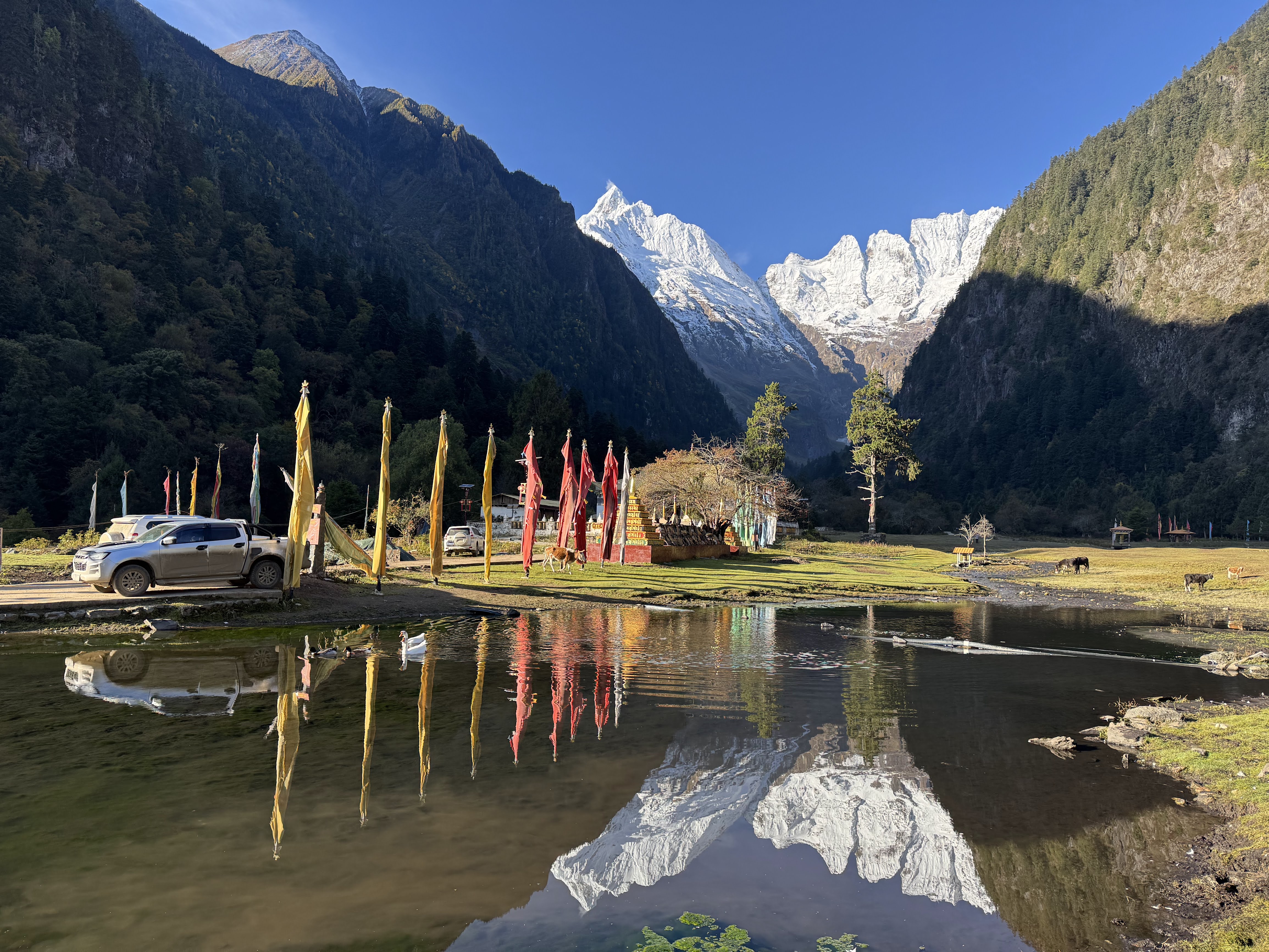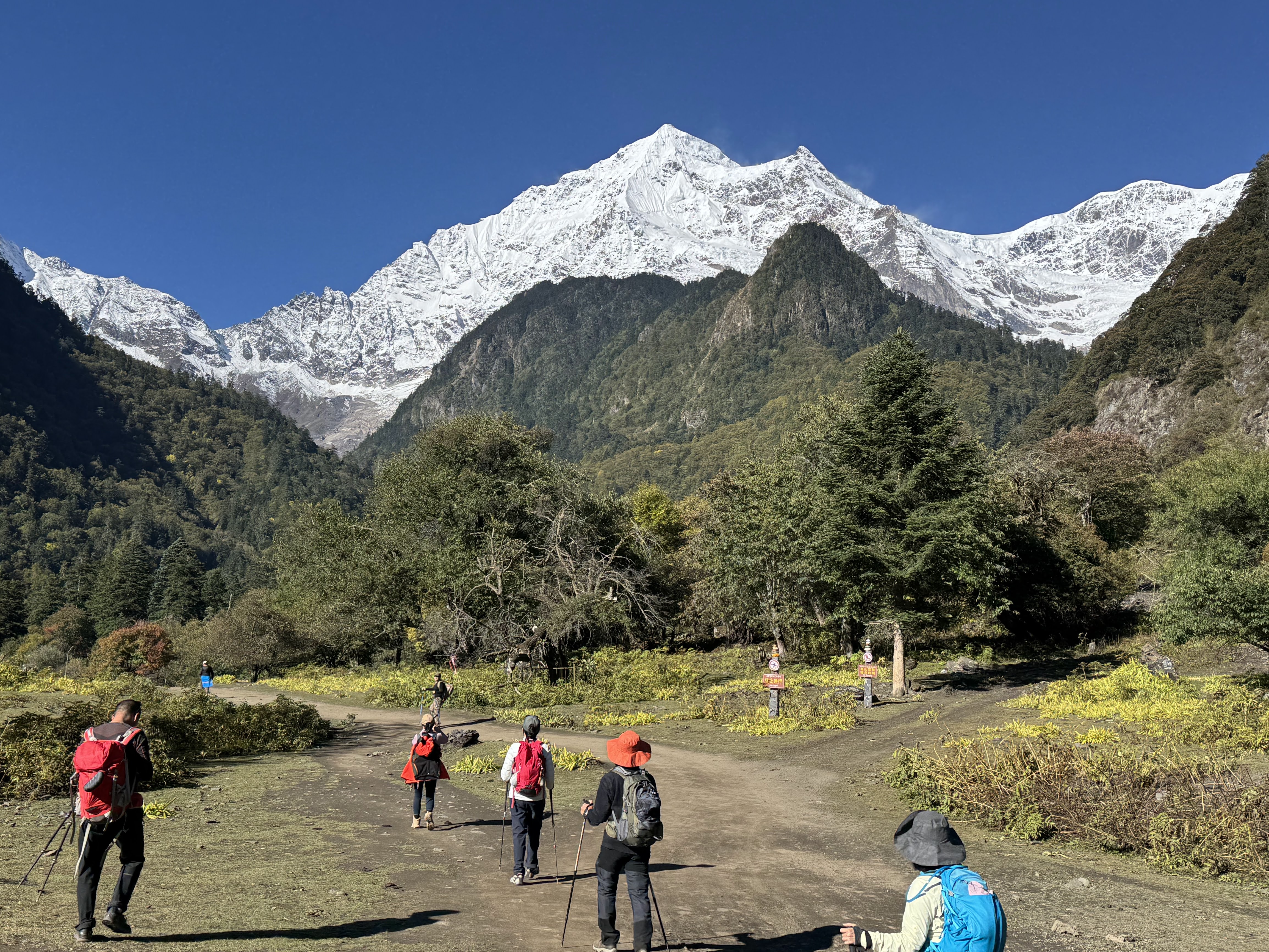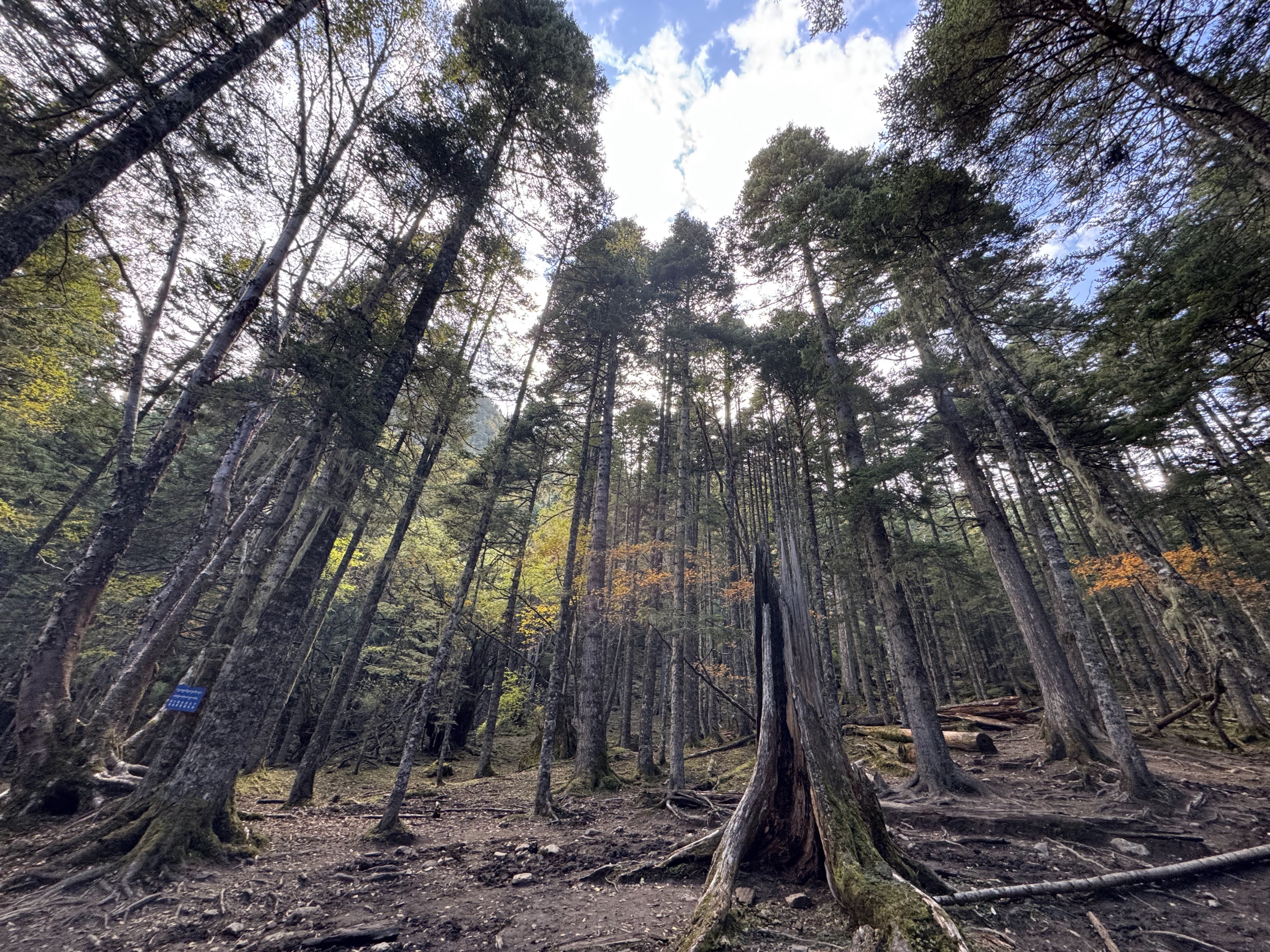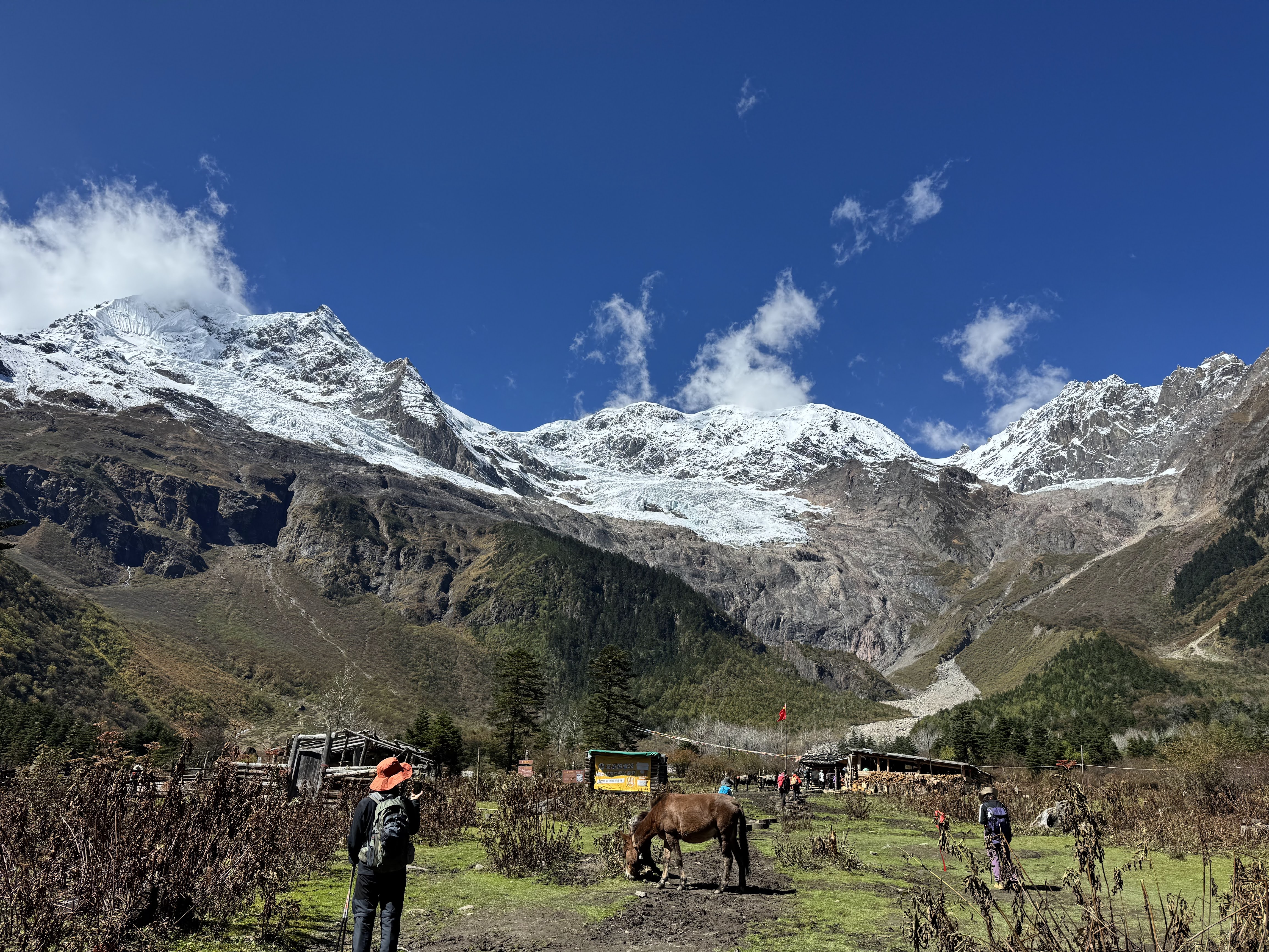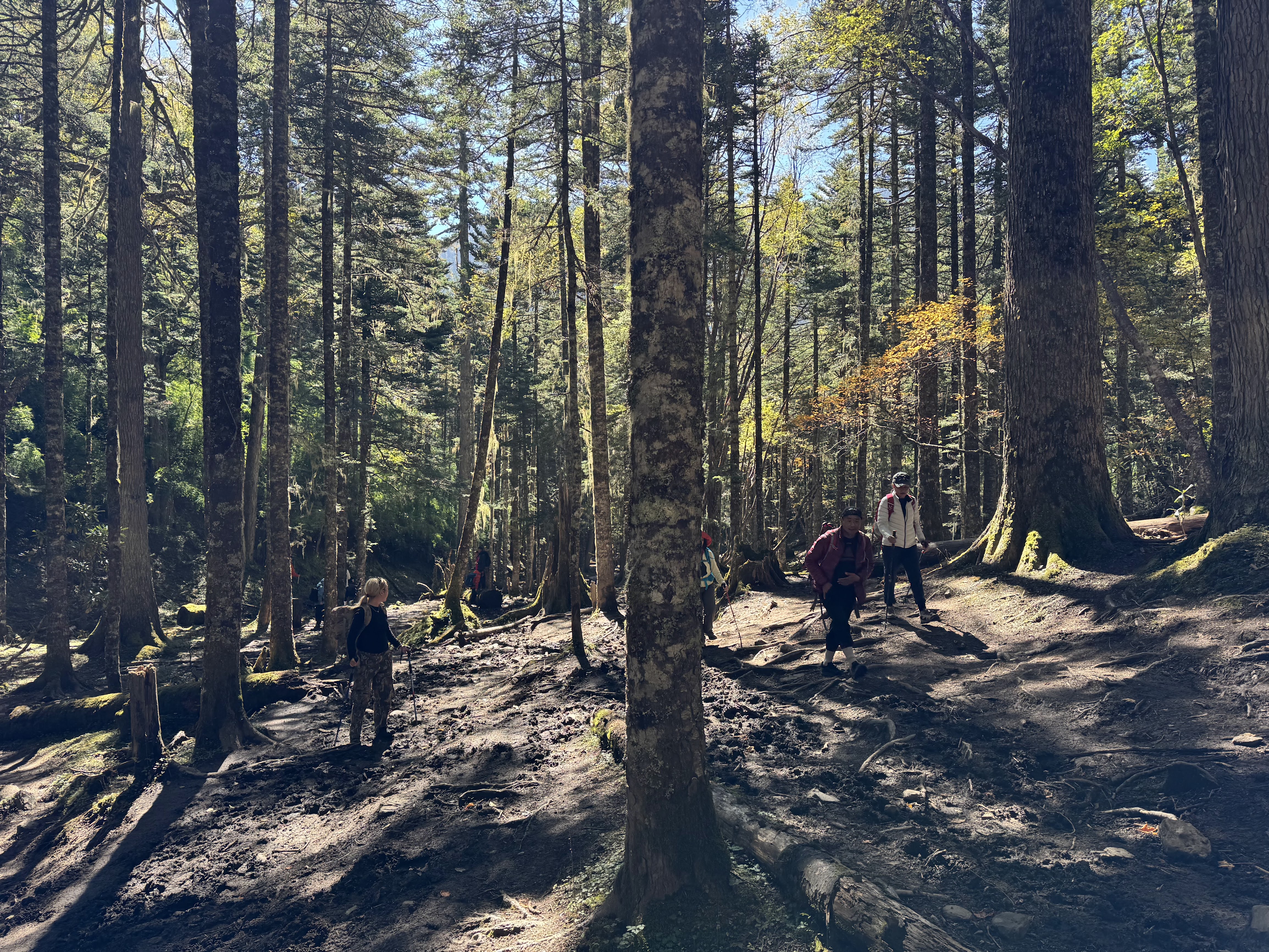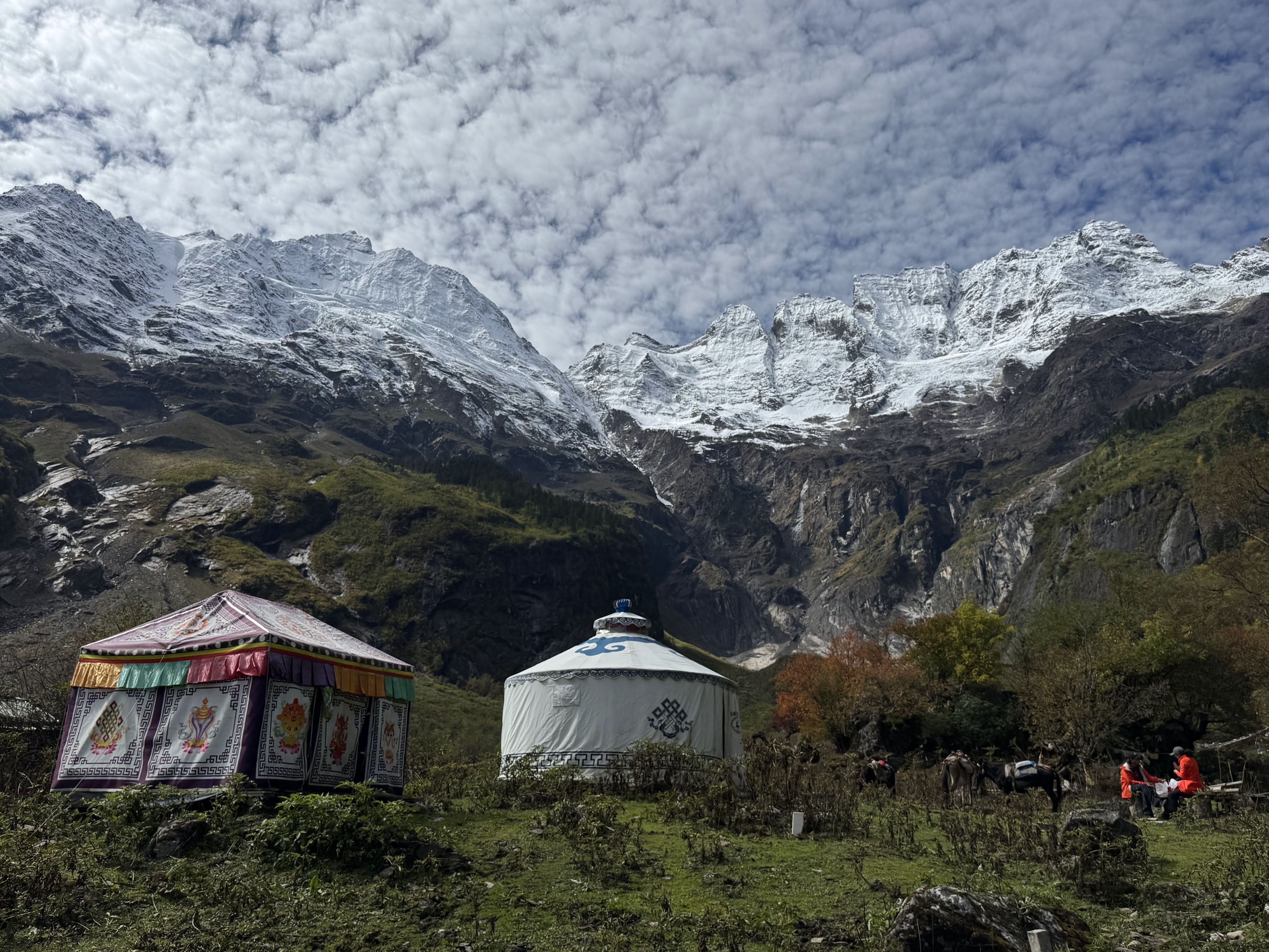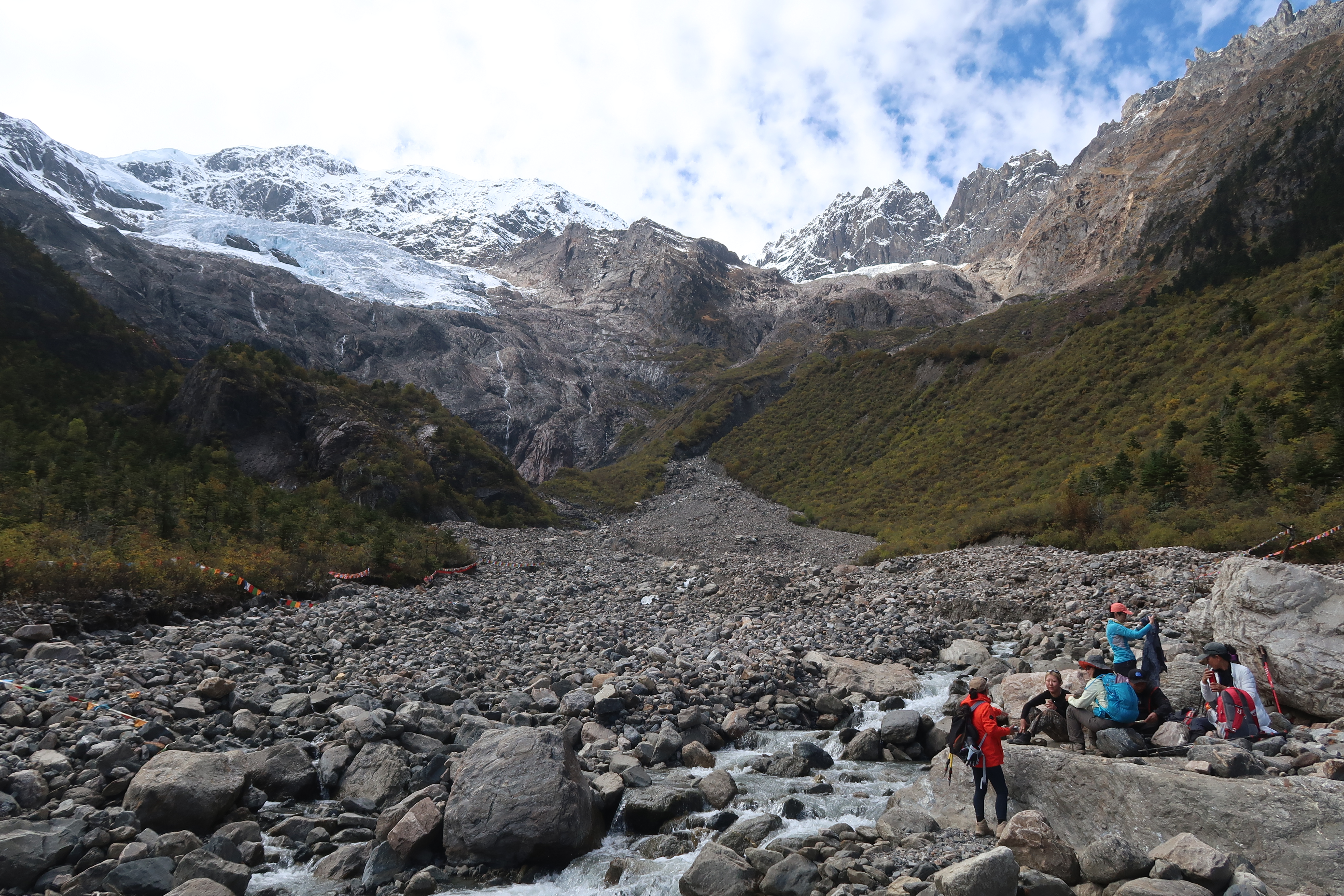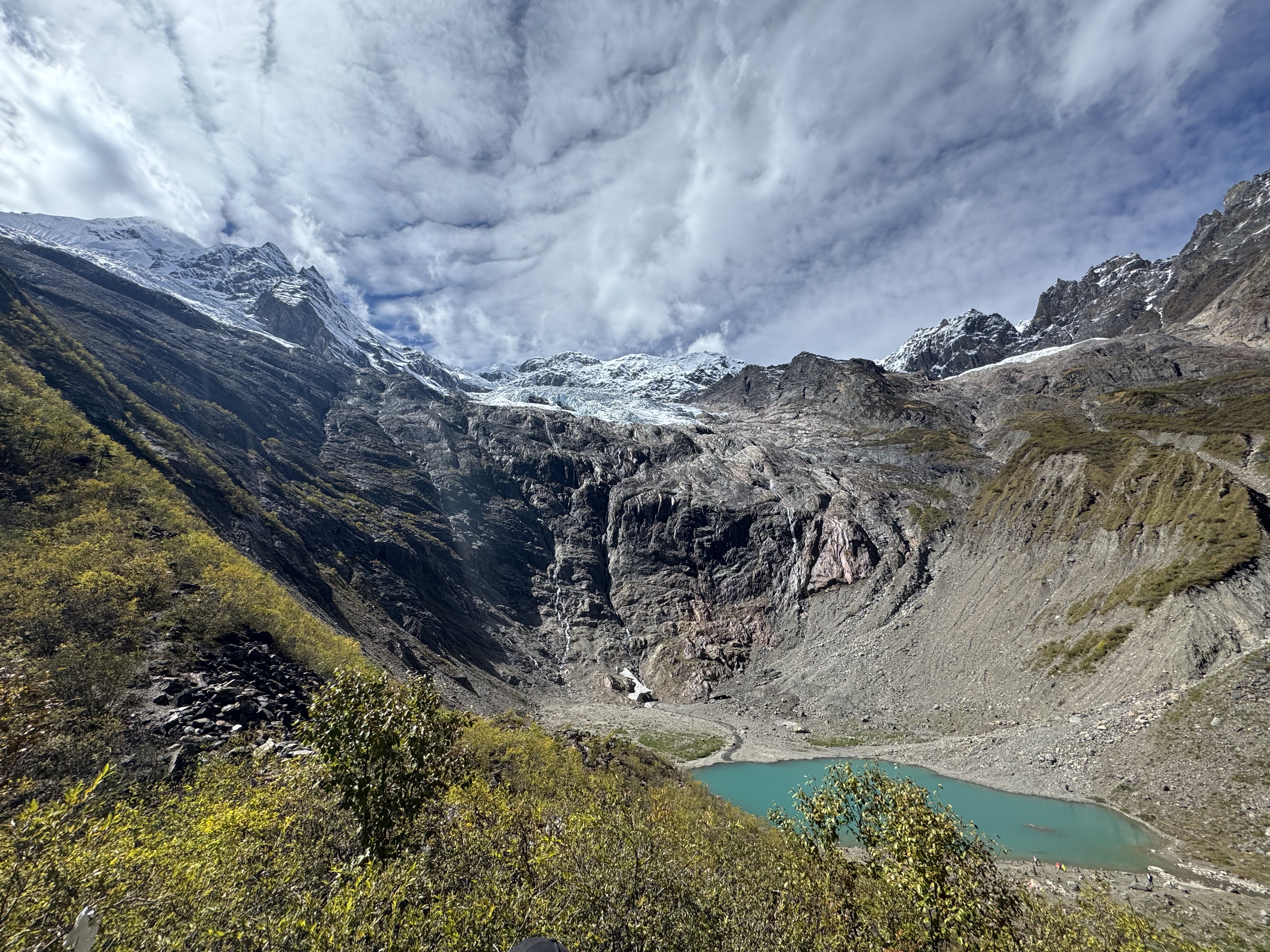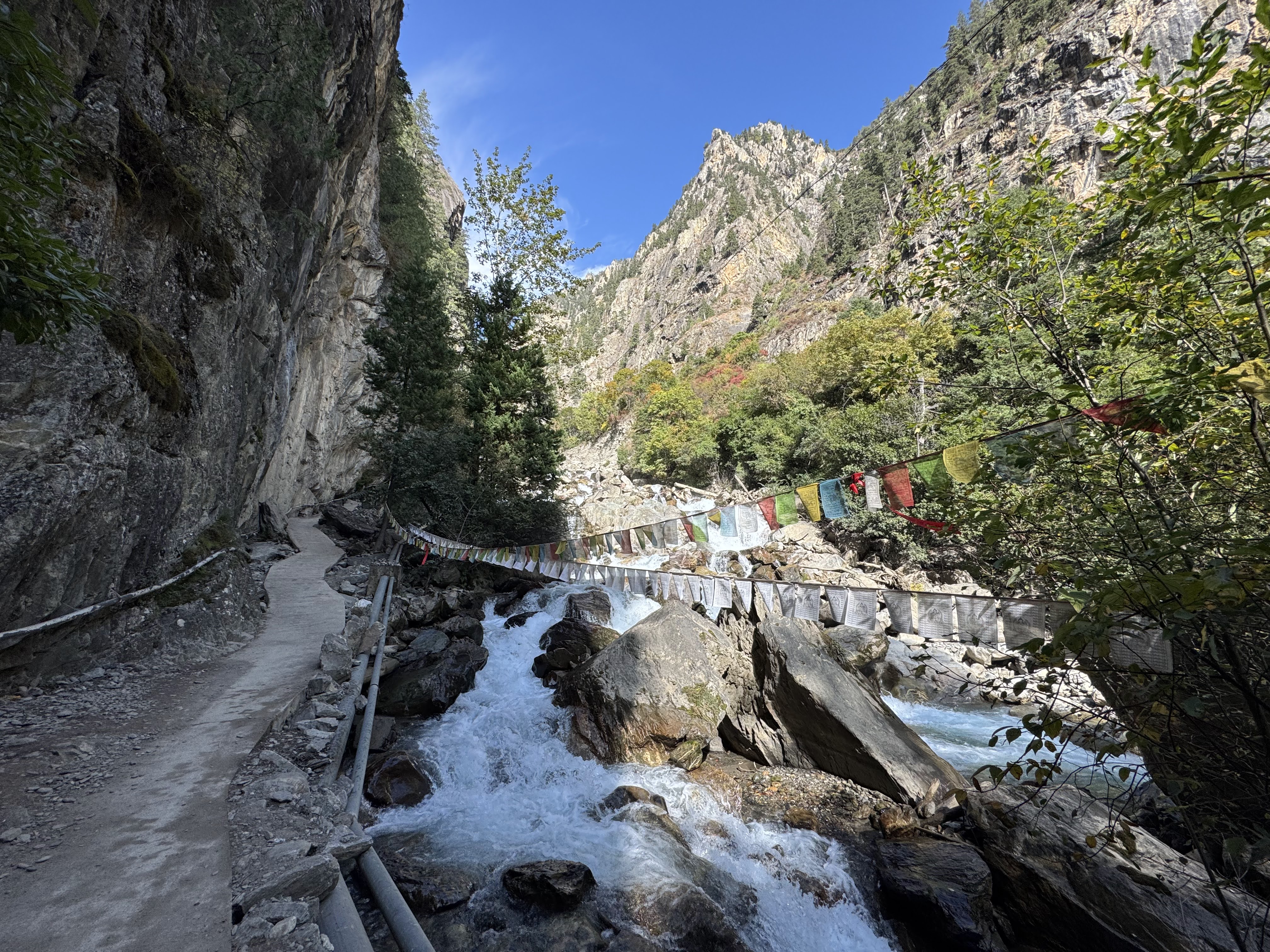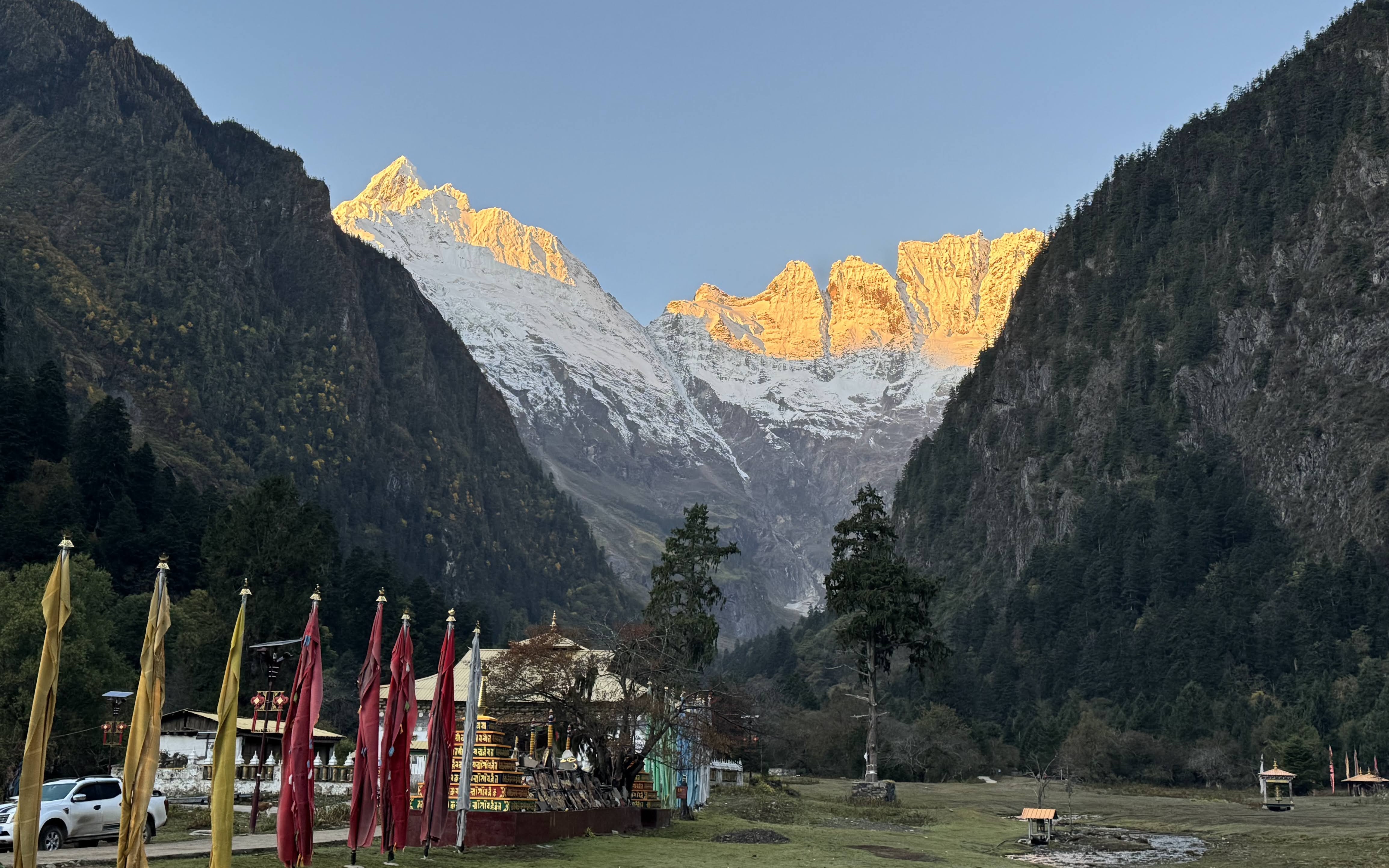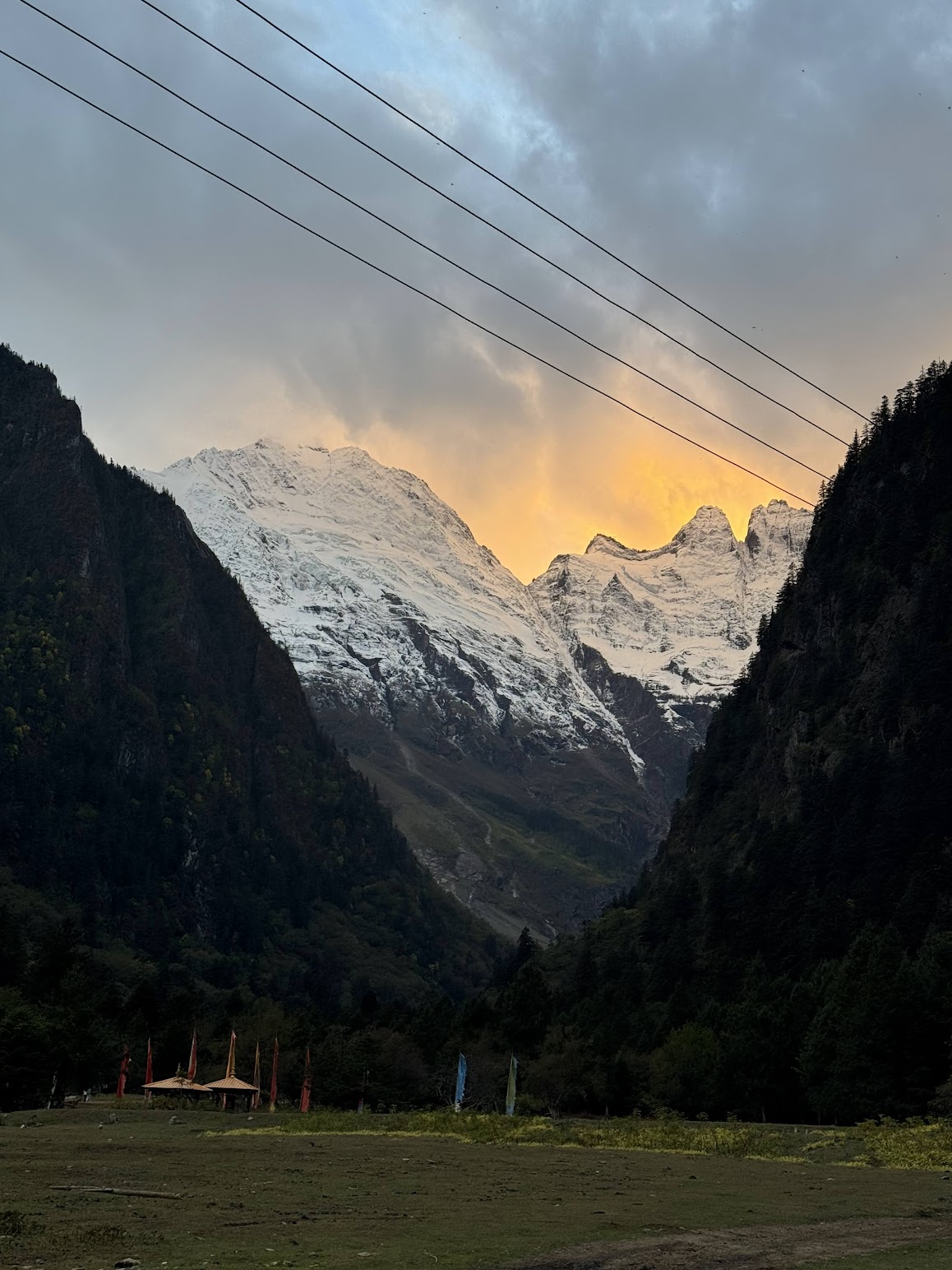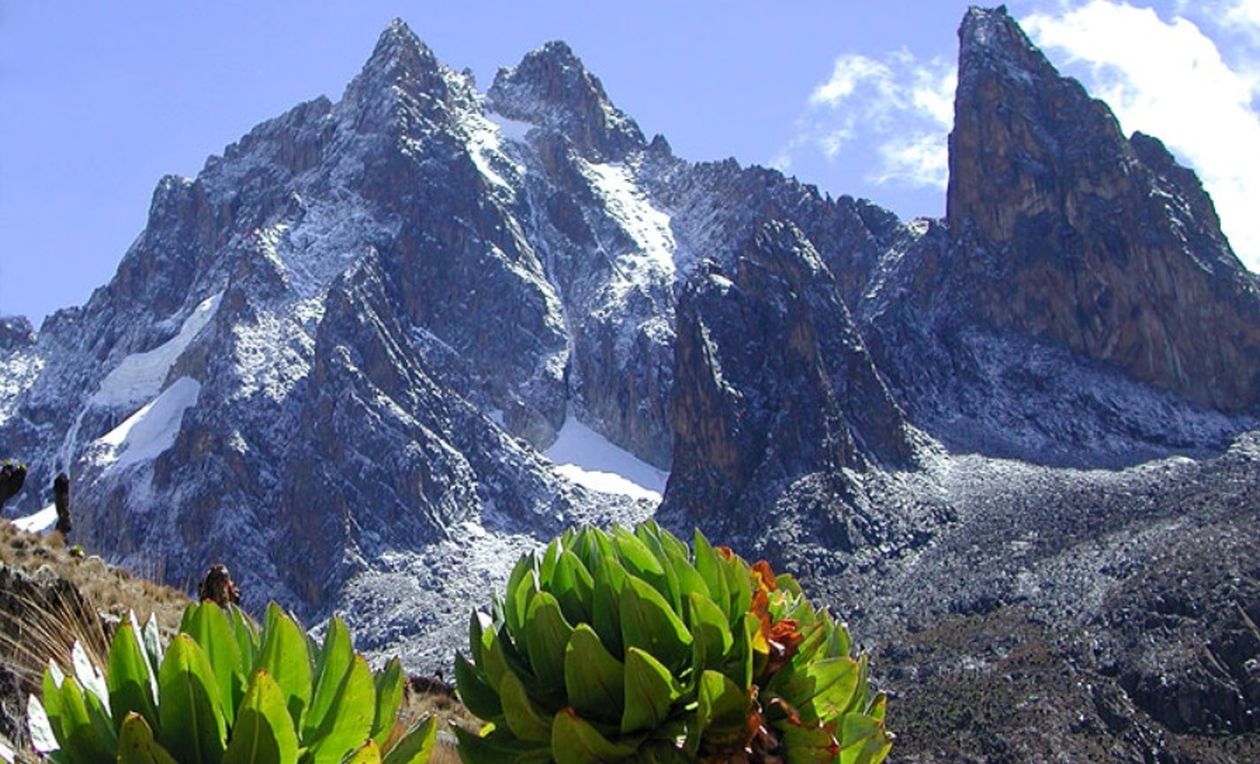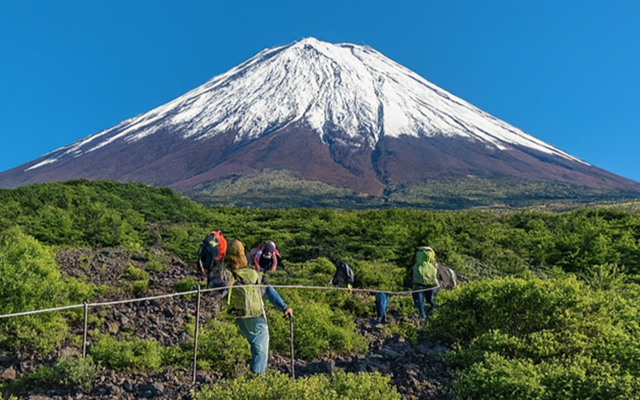

Meili–Yubeng Trek, nestled beneath the sacred Meili Snow Mountain (梅里雪山) range in northwest Yunnan, is one of China’s most iconic highland journeys. Framed by towering peaks, deep glacial valleys, and remote Tibetan villages, the trek blends dramatic alpine scenery with a profound sense of spiritual heritage. The trails pass through ancient forests, pristine rivers, and sweeping high-mountain basins, offering trekkers an immersive experience in both nature and culture. The Yubeng region is especially beloved by hikers seeking a meaningful adventure that feels far removed from the modern world.
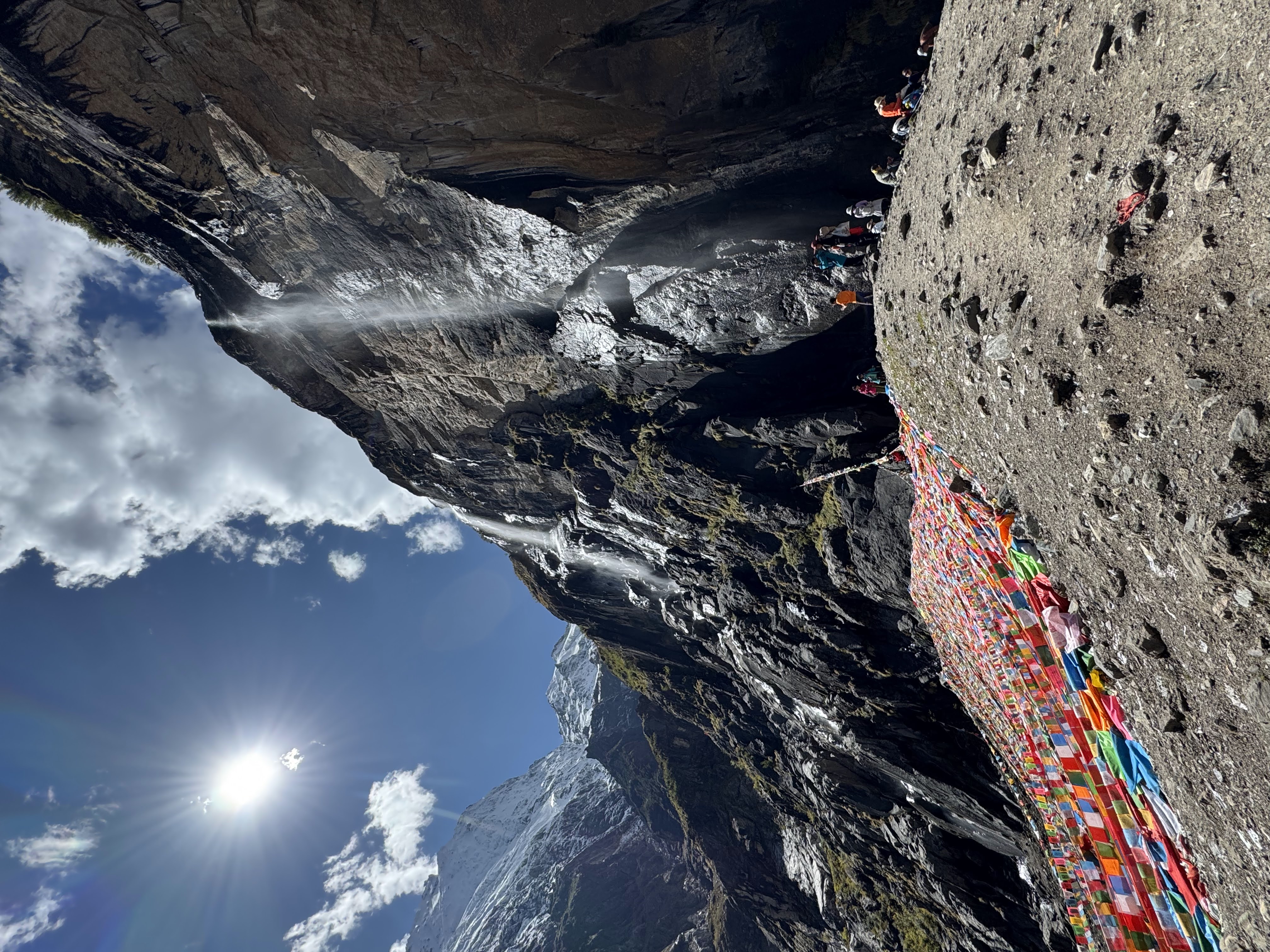
Hidden beyond steep mountain passes and accessible only on foot or horseback until recently, Yubeng Village (雨崩村) has long been regarded as a sacred sanctuary in Tibetan tradition. For centuries, pilgrims have completed the Kora around Kawagebo (6740m), the highest and holiest peak in Yunnan, honoring the mountain as a powerful spiritual guardian. Evidence of this legacy is still visible in prayer flags, mani stones, and small shrines scattered along the trails. The surrounding valleys—particularly those leading toward the Sacred Waterfall (神瀑) and Ice Lake (冰湖) —create a landscape of remarkable purity, where spiritual significance and natural beauty converge.
The Meili–Yubeng trek is structured around a series of interconnected trails that link the upper and lower sections of Yubeng Village with two key natural sanctuaries: the Sacred Waterfall (神瀑) and the Ice Lake (冰湖). These routes highlight the diversity of the region—from serene forest paths to rugged glacial cirques and panoramic high-altitude viewpoints.
Our itinerary begins with an ascent to Nanzong Pass 南宗垭口 (3,700m) by 4-wheel drive from the Mekong River valley that serves as the dramatic gateway into Yubeng. Once over the pass, trekkers descend by foot into one of the most enchanting and secluded valleys in the wider Meili range. From Yubeng Village, two classic day routes extend deeper into the mountains:
The Sacred Waterfall Trail (神瀑), a steady climb through forest and grassland to a waterfall revered by Tibetan pilgrims, who traditionally circumambulate it for spiritual blessing.
Though not technically difficult, the trek demands good fitness due to sustained elevation gain, high-altitude exposure, and occasionally rough terrain.
The optimal trekking seasons are late April to early June and late September to early November, when the weather is more stable, visibility is excellent, and temperatures are moderate. Spring offers blooming alpine flora and crisp views of Kawagebo’s snowy summit, while autumn features golden forests and clear, dry conditions ideal for high-altitude travel.
The peak monsoon months (July–August) are the least favorable, as persistent rain, landslides, and cloud cover obscure mountain scenery and significantly increase trail hazards.
This trek is graded 2B
Good to have some high-altitude trekking experiences but not necessary. You will be trekking above 3500m sometimes on steep paths and also in forest trails. The backpack load you have to carry ranges from 5-8kg. While the load may be less during the day treks in the village, you will be heading for the higher altitudes. The load is expected to be heavier for the trek into and out of the village.
You will need a lightweight base layer or quick dry t-shirt and long trekking pants for the trek. A water and wind proof outershell is essential to protect from the weather elements. After sundown, a fleece or lightweight down jacket is needed to keep warm.
A packing list will be provided to all our participants. Please refer to our Resource Centre page for information on the layering system and how to choose the right gear/equipment for your trek.
| Day | Description | Meals |
| 1 | Arrive in Lijiang (2400m). O/N in hotel. | – |
| 2 | Drive to Shangri-La (3200m). Free & easy to walk around Dukezong ancient city (独克宗古城). O/N in hotel. | B/L/D |
| 3 | Morning visit Songzanlin Monastery (松赞林寺). Transfer to Feilaisi (飞来寺) (3300m). O/N in hotel. | B/L/D |
| 4 | Transfer to Xidang (西当村). Take 4WD to Nanzong Pass (3700m) and trek down to Upper Yubeng Village (3150m). O/N Guesthouse. | B/*-/D (*Prepare your own dry rations) |
| 5 | Day trek to Ice Lake (3900m). Stay Upper Yubeng Village. O/N Guesthouse. | B/*-/D (*Prepare your own dry rations) |
| 6 | Trek to Sacred Waterfall (3657m). Stay at Lower Yubeng Village (3050m). O/N Guesthouse. | B/*-/D (*Prepare your own dry rations) |
| 7 | Trek out via Ninong Canyon (尼农峡谷). Transfer to Feilaisi. O/N in hotel. | B/-/D |
| 8 | Drive to Lijiang. O/N in hotel. | B/-/- |
| 9 | Depart Lijiang | B/-/- |
| DATES | PRICE |
| 6-14 June 2026 (with a Trek Leader) |
$1,700 (SGD) / person (Group size: 6-8 people) $1,580 (SGD) / person (Group size: 9 or more people) |
Minimum group size: 6 people. For enquiry, send an email to us at [email protected]
1. Trip briefing and information kit
2. Gear list and gear discount from selected Singapore outdoor outfitters
3. Complimentary group training sessions
We carefully select and establish strong working relationship with our local trek operator to ensure safe participation by everyone. Our local trekking guides have extensive experience in guiding treks in Lijiang and Shangri-La, and also possess intimate knowledge of the local surroundings, conditions and culture.
Holders of ordinary passports issued by the following countries do not need a visa to enter China as long as their trip does not last longer than the visa-free period listed below.
|
Duration |
Countries |
|
30 days |
Bahamas, Ecuador, Fiji, Grenada, Mauritius, San Marino, Serbia, Seychelles, Tonga |
|
15 days |
Brunei, Japan, Singapore |
For latest updates and details of visa application, please visit https://www.visaforchina.org.
In Chengdu, currency exchange services are available at the airport, hotels, malls, local banks, and moneychangers throughout the city. ATMs are plentiful, most accepting international credit cards and debit cards. Credits cards are commonly accepted in most mid-range to high-end restaurants and hotels in the city. However, these are all scarce or not available at all in the remote towns and areas.
In recent years, mobile payment and going cashless has become mainstream in China (E.g. Alipay, WeChat Pay and QQ Wallet). Otherwise, for foreigners, cash is still the most reliable form of payment in China.
As of November 2019, travellers can now use AliPay and WeChat Pay mobile payments. AliPay and WeChat Pay are the 2 dominant mobile payment platforms in China accepted by everybody from big brands to street vendors.
AliPay lets tourists create a prepaid account and fund it with Visa, MasterCard, JCB or MasterCard. WeChat Pay links to a credit card and supports Visa, MasterCard, AMEX, Discover, JCB, and Diners Club.
China’s electricity is 220V and 50HZ. There are three types of plugs used in China. Two flat parallel pins (Type A) is the most common; two narrow round pins (Type C) and three-pronged angled pins (Type I).
Mandarin is the official language spoken and taught in schools all over China. There are 56 official ethnic groups, some having their own language and writing system. Even the majority Hans which make up 91% of the population speak many different dialects and their variations, according to the region they hail from. So their common language is hence Mandarin (普通话).
English is gaining popularity in the young and professionals as a window to the world, but common usage is non-existent. It is hardly understood or spoken by anyone including those working in the tourist service industry, except in international chains of hotels.
Tap water is not drinkable in China, even in major cities. Bottled water is easily available from supermarkets to hotels.
Giving a tip to tour guides is a common practice in China but other service staff in hotels, restaurants and taxi drivers in general do not expect a tip from tourists.
With evolving world situations that may occur unexpectedly due to natural disasters, pandemics/epidemics, conflicts and unrests, it is best to read up and keep tabs on news and developments at your destination country and region before the trip. Check on the country’s official website and/or your own foreign ministry website for any travel advisory or safety precautions to be taken while abroad.
As with traveling in anywhere in the world, regardless of the local crime rate, stay vigilant and take care of personal safety. Good to read up on any possible exposure in the country prior to departure.
It is a good practice to register with your respective foreign ministry if there is such a service provided to citizens, to contact you in order to make sure that you are safe and, if need be, assist you should an emergency (e.g. natural disasters, civil unrest, etc.) occur when you are overseas.
For Singaporeans, this is the link to the Ministry of Foreign Affairs’ eRegister:
https://eregister.mfa.gov.sg/eregisterportal/common/preLoginEregisterView.action
It is highly recommended to purchase comprehensive travel insurance(s), upon payment of your trip, to cover adverse situations that may occur while you are overseas or even before departure. Ensure that the coverage is suitable for your destination and the activities that you are participating in. Be familiar with the terms and conditions before purchasing and travelling abroad.
There is no compulsory vaccine to be taken to enter China. You should, however, be up to date on routine vaccinations, especially vaccines against water-borne, food-borne, parasitic and other infectious diseases (examples: hepatitis, typhoid and tuberculosis) while traveling to any destination. You are encouraged to consider having vaccinations before you travel. At least eight weeks before you depart, make an appointment with your doctor or travel clinic for a basic health check-up, and to discuss your travel plans and any implications for your health, particularly if you have an existing medical condition.
Recommended routine vaccinations for travellers in general:
|
Hepatitis A |
Spread through consuming contaminated food and water or person to person through the faecal-oral route. Risk is higher where personal hygiene and sanitation are poor. |
|
Hepatitis B |
Spread through infected blood and blood products, contaminated needles and medical instruments and sexual intercourse. Risk is higher for those at occupational risk, long stays or frequent travel, children (exposed through cuts and scratches) and individuals who may need, or request, surgical procedures abroad. |
|
Rabies
|
Spread through the saliva of an infected animal, usually through a bite, scratch or lick on broken skin. Particularly dogs and related species, but also bats. Risk is higher for those going to remote areas (who may not be able to promptly access appropriate treatment in the event of a bite), long stays, those at higher risk of contact with animals and bats, and children. Even when pre-exposure vaccine has been received, urgent medical advice should be sought after any animal or bat bite. |
|
Tetanus
|
Spread through contamination of cuts, burns and wounds with tetanus spores. Spores are found in soil worldwide. A primary series of 5 doses of tetanus vaccine is recommended for life. Boosters are usually recommended in a country or situation where the correct treatment of an injury may not be readily available. |
|
Typhoid Fever |
Spread mainly through consumption of contaminated food and drink. Risk is higher where access to adequate sanitation and safe water is limited. |
|
Influenza |
A vaccine specific for a given year to protect against the highly variable influenza virus. |
For more information and professional advice on travel vaccinations, please consult your doctor or travel clinic.
For people residing in Singapore, you may visit The Travellers’ Health and Vaccination Clinic (THVC) at Tan Tock Seng Hospital:
Travellers’ Health & Vaccination Clinic
Address: Level 4, Clinic 4B, Tan Tock Seng Hospital Medical Centre
Contact number: 6357 2222
Website : https://www.ttsh.com.sg/Patients-and-Visitors/Medical-Services/Travellers-Health-and-Vaccination-Clinic/Pages/default.aspx.