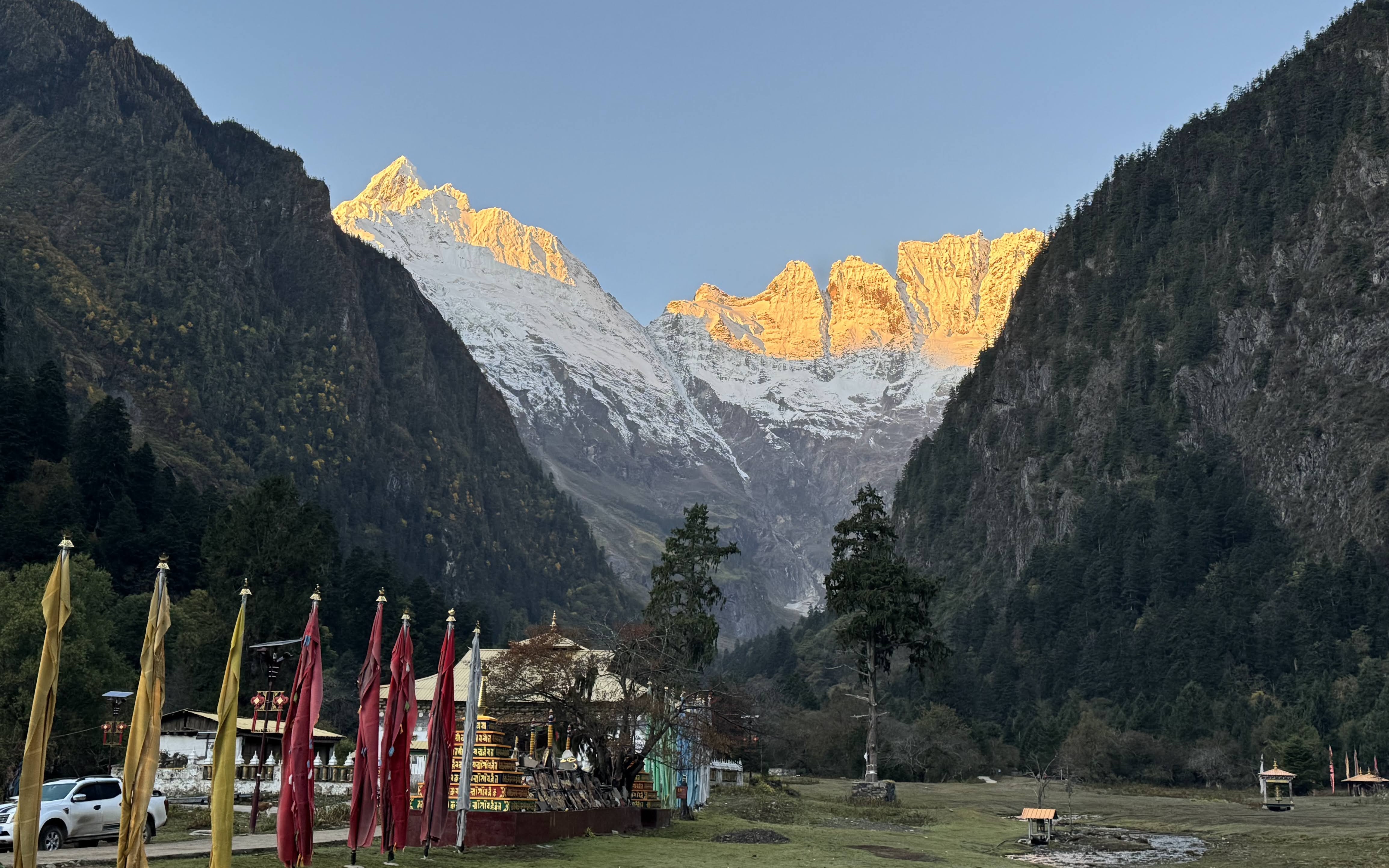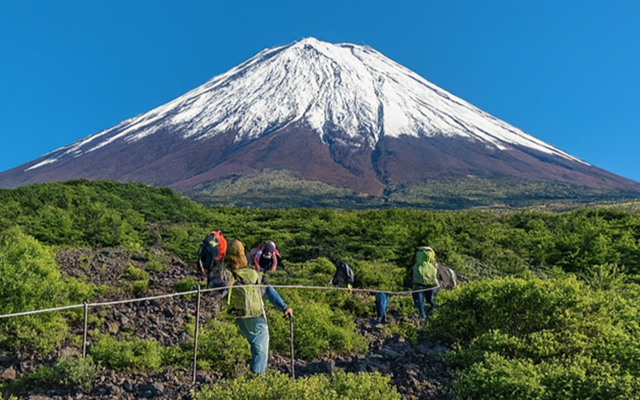

Mount Kenya, the second highest mountain in Africa after Kilimanjaro, rises to 5199m and is a UNESCO World Heritage Site and Biosphere Reserve. Its dramatic peaks, sculpted valleys, and glacial tarns form one of the most striking mountain landscapes on the continent. The mountain is an ancient extinct volcano, and its rugged summits of Batian (5199m), Nelion (5188m), and the trekkable Point Lenana (4985m) offer a range of climbing and trekking experiences.
The Mount Kenya National Park, which surrounds the mountain, protects a unique ecosystem of alpine meadows, montane forests, bamboo zones, and afro-alpine moorlands. The region is rich in wildlife, home to species such as buffalo, bushbuck, colobus monkeys, and a remarkable diversity of birds and alpine flora.
There are 6 entry points to trek Mt Kenya and each offers a different challenge and experience. We have chosen the Sirimon–Chogoria traverse as it is widely regarded as the most scenic and rewarding route to Point Lenana, the highest non-technical trekking peak on the mountain (4985m). It combines the gradual, less-crowded Sirimon route on ascent with the spectacular Chogoria route on descent, offering contrasting views and ecosystems on either side of the mountain.
Our 6-day trek begins from the Sirimon Gate (2650m), on the dry northwest side of the mountain. The trail climbs gradually through lush montane forests and open moorlands to Old Moses Camp (3300m), where you will spend the first night. Continuing upward, the path winds through the scenic Mackinder Valley, surrounded by towering peaks and giant lobelias, before reaching Shipton’s Camp (4200m).
An early pre-dawn start on summit day leads to Point Lenana (4985m) in time for sunrise, an unforgettable experience as the first rays of light reveal the jagged spires of Batian and Nelion and the sweeping Kenyan plains far below. After soaking in the views, the descent follows the Chogoria route, passing the striking Gorges Valley, Lake Michaelson, and rolling alpine meadows. The trek ends at Chogoria Gate (2950m), where you will be met for the onward or return journey.
The Sirimon–Chogoria trek is a moderately challenging 6-day adventure suitable for fit trekkers. It offers an ideal blend of natural beauty, varied landscapes, and the satisfaction of summiting one of Africa’s most iconic mountains without technical climbing.
Due to its location near the equator, Mt Kenya experiences relatively stable temperatures throughout the year. The main variations in weather are influenced more by altitude, time of day, and rainfall patterns than by distinct seasonal temperature changes.
While it is possible to climb Mt Kenya at any time of the year, it is best to avoid the rainy season from March to June and October to December.
The popular trekking seasons are:
This 4-day safari combines three of Kenya’s most captivating wildlife and scenic destinations — Lake Naivasha, Lake Nakuru National Park, and the world-renowned Maasai Mara National Reserve. The journey takes you through the heart of the Great Rift Valley, offering a mix of birdlife, big game, and sweeping savannah landscapes. In Maasai Mara, this is the peak of the Great Migration, when hundreds of thousands of wildebeests and zebras cross the Mara River, pursued by predators — a once-in-a-lifetime experience.
This trek is graded 2B+. It is a multi-day peak climbing trek with a mix of staying in mountain huts and camping for 1 night.
Good to have above 3500m high altitude trekking experience. You will be trekking above 4000m in undulating mountain terrain with a personal backpack load of 5-6kg for 6 days. The climb up to the summit entails scrambling up steep rocky terrain. Some days, especially the summit day, will involve long hours of trekking up to 10 hours, hence good fitness and endurance is expected.
You will need thermal base layers, a fleece jacket and an outer shell jacket. When at the campsites, after sundown and for the summit, a down jacket will help keep you warm. A down sleeping bag is also needed and provided.
A packing list will be provided to all our participants. Please refer to our Resource Centre page for information on the layering system and how to choose the right gear/equipment for your trek.
| DAY | DESCRIPTION | MEALS |
| 1 | Arrive in Nairobi. Drive 4hrs to Mountain Lodge at base of Mt Kenya (1950m). Acclimatization walk in vicinity. | -/-/D |
| 2 | Transfer to Sirimon Gate (2600m). Trek to Old Moses Camp (3340m) | B/L/D |
| 3 | Trek to Shiptons Camp (4236m) | B/L/D |
| 4 | Acclimatisation day. Trek to Hausberg’s Col (4600m) | B/L/D |
| 5 | Summit trek to Pt Lenana (4985m). Descend to Nithi Camp (3300m). | B/L/D |
| 6 | Trek to Meru Bandas (3000m) | B/L/D |
| 7 | Trek to pick up point (2600m). (End of trek) Drive to Lake Naivasha (Start of safari) |
B/L/D |
| 8 | Drive to Lake Nakuru | B/L/D |
| 9 | Drive to Masaai Mara | B/L/D |
| 10 | Full day in Masaai Mara | B/L/D |
| 11 | Transfer to Nairobi | B/L/D |
| 12 | Depart Nairobi (Programme ends here. Next day arrival on flight, if any, not reflected in itinerary) | B/-/- |
| Dates | Prices |
| 1-12 Aug 2026 (Trek* & Safari) * with a AAE Trek Leader | $5,200 (SGD) / person |
| 1-7 Aug 2026 (Trek Only) * with a AAE Trek Leader | $2,850 (SGD) / person + ## |
| 7-12 Aug 2026 (Safari Only) | $2,350 (SGD) / person + ## |
## Trek only and safari only packages will require separate transfer to/from and accommodation in Nairobi.
Group size: 5 – 12 people
1. Trip briefing and information kit
2. Gear list (Pack list)
3. Complimentary group training sessions
We carefully select and establish a strong working relationship with our local trek operator to ensure a high standard of service and safe participation by everyone.
Our local climbing guides have extensive experience in guiding treks in Kenya and possess intimate knowledge of the local surroundings, conditions, and culture. They are well-trained in mountain first aid and rescue and carry a walkie-talkie with them during the trek.
Kenya is now using an Electronic Travel Authorization (eTA) system in place of visas.
Most foreign nationals must obtain an eTA before travelling to Kenya. The eTA is valid for a stay of up to 90 days and must be applied for online prior to travel (typically at least 72 hours before departure). Citizens of Singapore and Malaysia are currently exempted from the eTA. This may change so always check the official eTA website before travelling.
A passport valid for at least 6 months on arrival date in Kenya is required. Otherwise, you may not even be allowed on the airplane.
For latest updates and details of eTA application, please visit https://etakenya.go.ke/.
Currency exchange services can be found in banks and authorized moneychangers (Forex Offices or Forex Bureaux De Change), and they accept major currencies like US Dollar, Euro, and British Pounds. The Forex Offices or Forex Bureaux De Change typically has a better exchange rate than the banks, and have longer operating hours.
Credit cards are mainly only accepted in higher-end hotels, restaurants and shops catered to tourists. The service fee is typically charged back to the cardholder. So, paying in cash is still the best. Nonetheless, credit cards can be used to withdraw cash from ATMs that are linked to international systems such as Visa/MasterCard/Cirrus/Maestro/Plus networks.
Kenya’s electricity is 240V and 50HZ. The plug used in Kenya is the three flat pins (Type G), also known as the UK plug, similar to Singapore.
Kiswahili is the national language in Kenya and commonly spoken, with many local dialects. English is also an official language and most people are quite fluent in English. It will be very useful to learn some basics such as greetings, saying goodbye, etc.
Tap water is not drinkable in Tanzania. It is advisable to use bottled water for drinking and teeth cleaning to avoid any health issues. Bottled water is available everywhere from supermarkets to lodges. Ensure to have enough bottled water with you while on safari to avoid dehydration. When buying water from street vendors, make sure the bottle has a plastic seal around the cap.
Tipping in Kenya is common practice and expected in most situations. You are expected to tip tour guides, mountain guides, porters, safari crew and services in mid to high-end lodges. In restaurants and cafes for tourists, if a service charge is included on top of the 16% VAT, tipping is not necessary. In general, the tip is around 10-15% of the total bill and can be placed in the tip box. In hotel & lodges, USD2 per bag for the baggage boy is good enough.
With evolving world situations that may occur unexpectedly due to natural disasters, pandemics/epidemics, conflicts and unrests, it is best to read up and keep tabs on news and developments at your destination country and region before the trip. Check on the country’s official website and/or your own foreign ministry website for any travel advisory or safety precautions to be taken while abroad.
As with traveling in anywhere in the world, regardless of the local crime rate, stay vigilant and take care of personal safety. Good to read up on any possible exposure in the country prior to departure.
It is a good practice to register with your respective foreign ministry if there is such a service provided to citizens, to contact you in order to make sure that you are safe and, if need be, assist you should an emergency (e.g. natural disasters, civil unrest, etc.) occur when you are overseas.
For Singaporeans, this is the link to the Ministry of Foreign Affairs’ eRegister:
https://eregister.mfa.gov.sg/eregisterportal/common/preLoginEregisterView.action
It is highly recommended to purchase comprehensive travel insurance(s), upon payment of your trip, to cover adverse situations that may occur while you are overseas or even before departure. Ensure that the coverage is suitable for your destination and the activities that you are participating in. Be familiar with the terms and conditions before purchasing and travelling abroad.
There is no compulsory vaccine to be taken to enter Kenya, except Yellow Fever. You should, however, be up to date on routine vaccinations, especially vaccines against water-borne, food-borne, parasitic and other infectious diseases (examples: hepatitis, typhoid and tuberculosis) while traveling to any destination. You are encouraged to consider having vaccinations before you travel. At least eight weeks before you depart, make an appointment with your doctor or travel clinic for a basic health check-up, and to discuss your travel plans and any implications for your health, particularly if you have an existing medical condition.
Recommended routine vaccinations for travellers in general:
|
Hepatitis A |
Spread through consuming contaminated food and water or person to person through the faecal-oral route. Risk is higher where personal hygiene and sanitation are poor. |
|
Hepatitis B |
Spread through infected blood and blood products, contaminated needles and medical instruments and sexual intercourse. Risk is higher for those at occupational risk, long stays or frequent travel, children (exposed through cuts and scratches) and individuals who may need, or request, surgical procedures abroad. |
|
Rabies
|
Spread through the saliva of an infected animal, usually through a bite, scratch or lick on broken skin. Particularly dogs and related species, but also bats. Risk is higher for those going to remote areas (who may not be able to promptly access appropriate treatment in the event of a bite), long stays, those at higher risk of contact with animals and bats, and children. Even when pre-exposure vaccine has been received, urgent medical advice should be sought after any animal or bat bite. |
|
Tetanus
|
Spread through contamination of cuts, burns and wounds with tetanus spores. Spores are found in soil worldwide. A primary series of 5 doses of tetanus vaccine is recommended for life. Boosters are usually recommended in a country or situation where the correct treatment of an injury may not be readily available. |
|
Typhoid Fever |
Spread mainly through consumption of contaminated food and drink. Risk is higher where access to adequate sanitation and safe water is limited. |
|
Influenza |
A vaccine specific for a given year to protect against the highly variable influenza virus. |
Yellow Fever
According to the World Health Organization (WHO), there is a risk of yellow fever transmission in Kenya. All travellers, including Singapore residents, who arrive in Singapore from countries with risk of yellow fever transmission are required to have a valid yellow fever vaccination certificate. Otherwise, they are liable to be quarantined under Section 31 of the Infectious Disease Act, for up to six days upon arrival in Singapore.
Hence, it is advisable to be vaccinated for yellow fever before you depart for Kenya.
Malaria
Malaria is present in most areas outside of Nairobi. While areas with high altitudes over 2000m such as during the trek are relatively malaria-free, you may pass areas where malaria is present to get there. There is certainly risk of malaria in the safari areas. Anti-malarial precautions such as medication and use of repellent is strongly recommended.
For more information and professional advice on travel vaccinations, please consult your doctor or travel clinic.
For people residing in Singapore, you may visit The Travellers’ Health and Vaccination Clinic (THVC) at Tan Tock Seng Hospital:
Travellers’ Health & Vaccination Clinic
Address: Level 4, Clinic 4B, Tan Tock Seng Hospital Medical Centre
Contact number: 6357 2222
Website : https://www.ttsh.com.sg/Patients-and-Visitors/Medical-Services/Travellers-Health-and-Vaccination-Clinic/Pages/default.aspx