
Paldor Peak: A Lesser-Travelled Route in the Himalayas
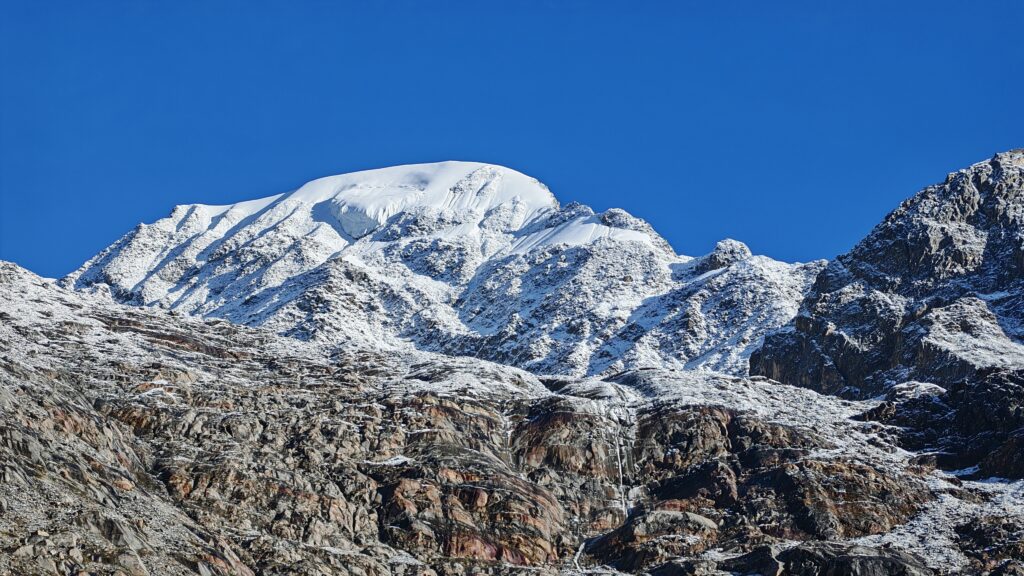
Paldor Peak is situated in the Ganesh Himal region, one of the most beautiful and less-travelled regions of Nepal, approximately north-northwest of Kathmandu. It stands at the southeastern end of the Ganesh Himal range and lies within the boundaries of Langtang National Park.
Paldor Peak is often considered a “trekking peak,” but it still provides a real alpine challenge:
- Use of crampons and ice axe
- Glacier travel and basic rope work.
- A summit push that feels like a true expedition day.
It is ideal for trekkers ready to step into mountaineering, or if you already have experience and prefer something quieter with fewer people around.
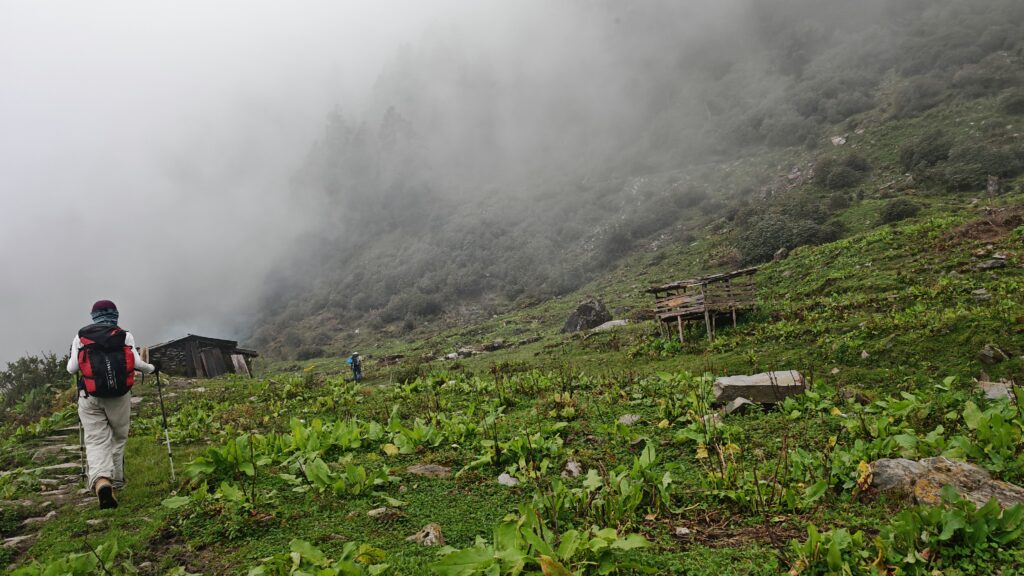
The journey starts with trekking through traditional villages, terraced farmland, and lush forests. This progression helps with acclimatisation before transitioning into a more rugged alpine environment as you approach base camp.
We will establish a high camp from which the summit can be reached in 7-8 hours under good conditions.
At just under 6000m, Paldor Peak offers spectacular panoramic views of surrounding peaks in the Ganesh Himal range, as well as glimpses toward Langtang Lirung and even parts of the Manaslu Himal on clear days, without the prolonged exposure to very high altitude.
Approach to Base Camp
The journey to Paldor Peak is as much a cultural and scenic experience as it is a climb. Starting with a drive to Gatlang via Syabrubesi, the trail quickly leaves the more frequented routes and enters a quieter, off-the-beaten region.
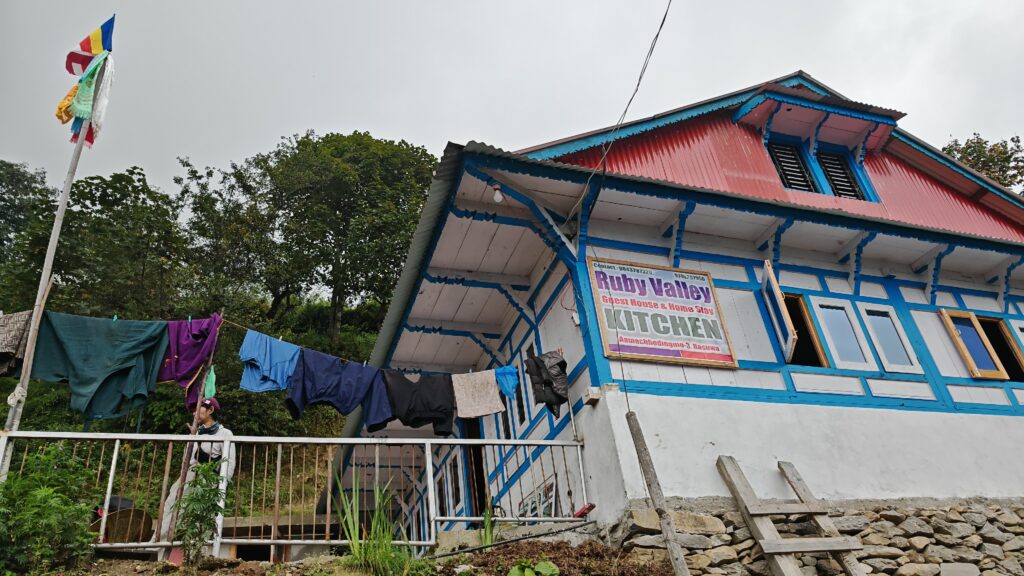
One of the key highlights is trekking through traditional Tamang villages such as Gatlang, where local culture, stone houses, and terraced fields offer a glimpse into rural Himalayan life.
As the trail progresses, the landscape gradually changes:
- Lower sections feature lush forests of rhododendron, oak, and fir
- Mid-sections open to alpine ridges with expansive mountain views
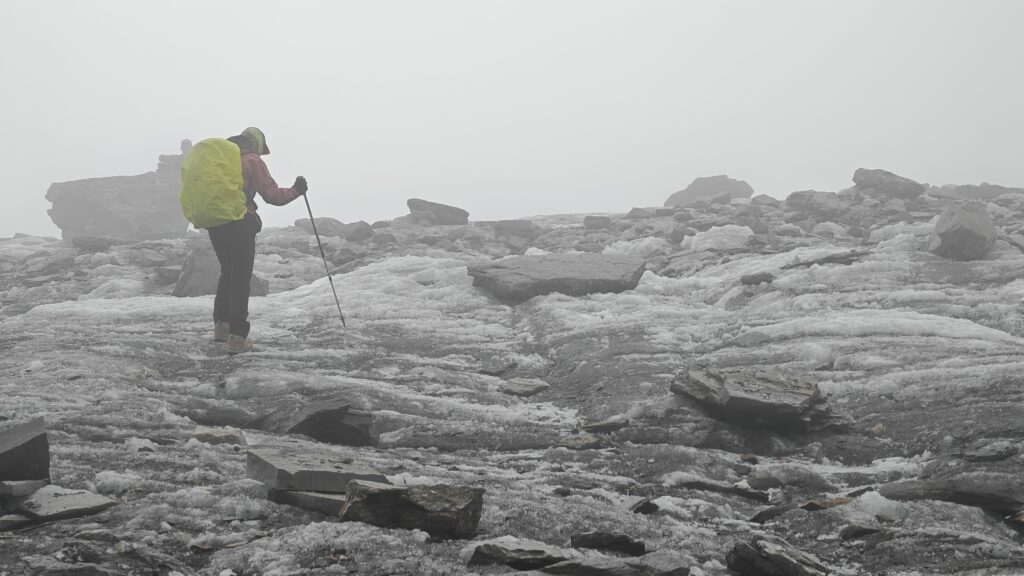
- Higher up, the terrain becomes rugged and glacial, with moraines and snowfields
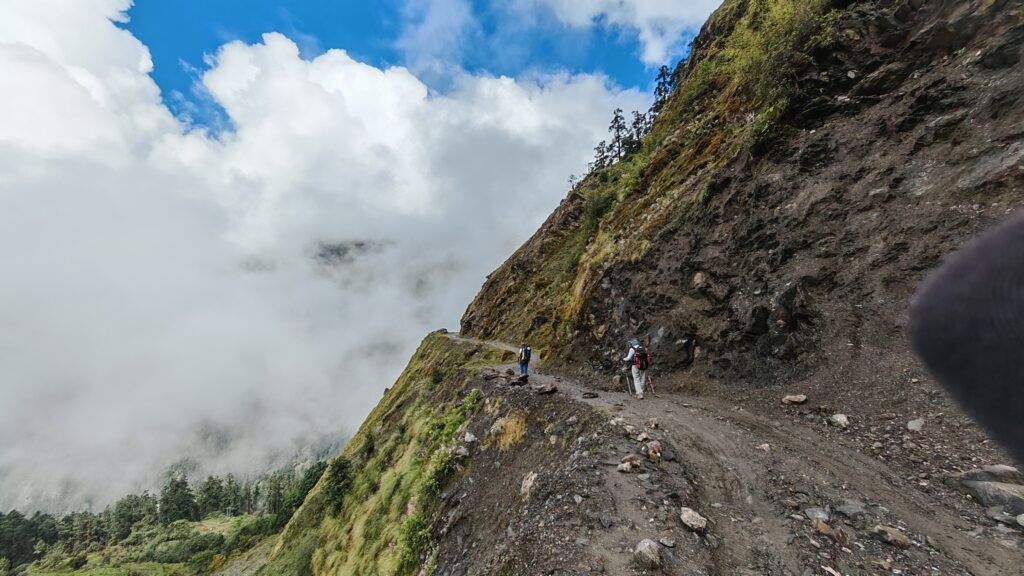
Trekkers pass waterfalls, high ridgelines, and tranquil valleys before reaching Somdang, a key acclimatisation stop. From here, the route to base camp becomes more remote and less travelled, adding to the overall expedition feel.
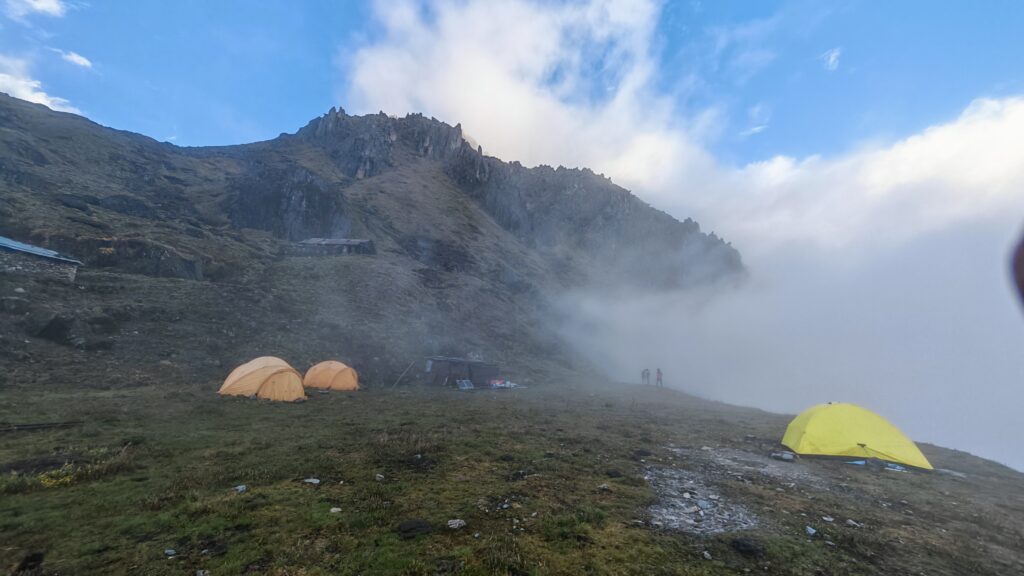
Paldor Base Camp itself sits around 4300m – 4500m, surrounded by stark glacial landscapes and towering peaks, marking the transition from trekking to mountaineering terrain.
The Summit Approach
The climb of Paldor Peak is often described as a “perfect first Himalayan peak” for those with basic mountaineering skills. While not technical, it demands proper use of crampons, ropes, and ice axes.
Key climbing features include:
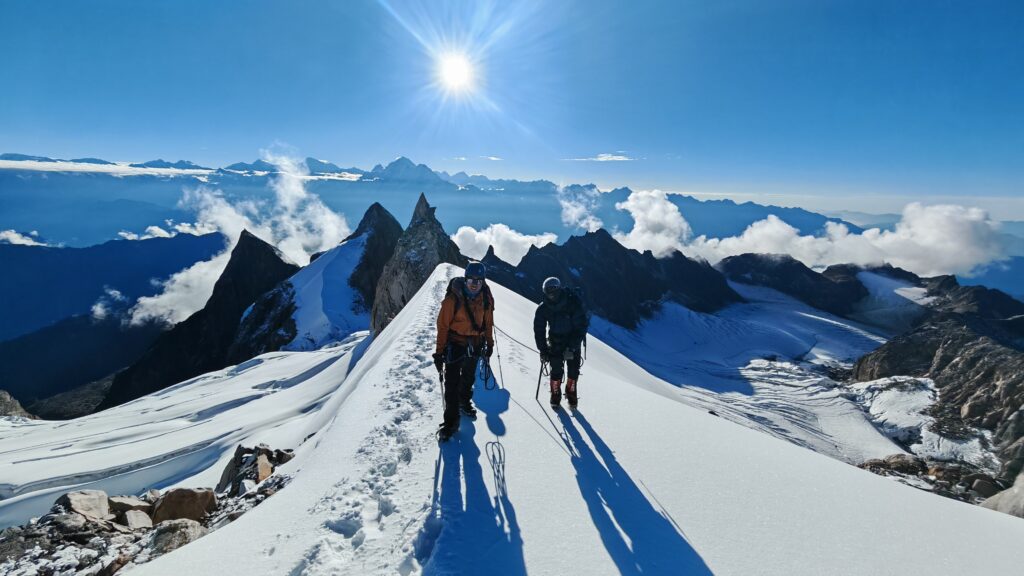
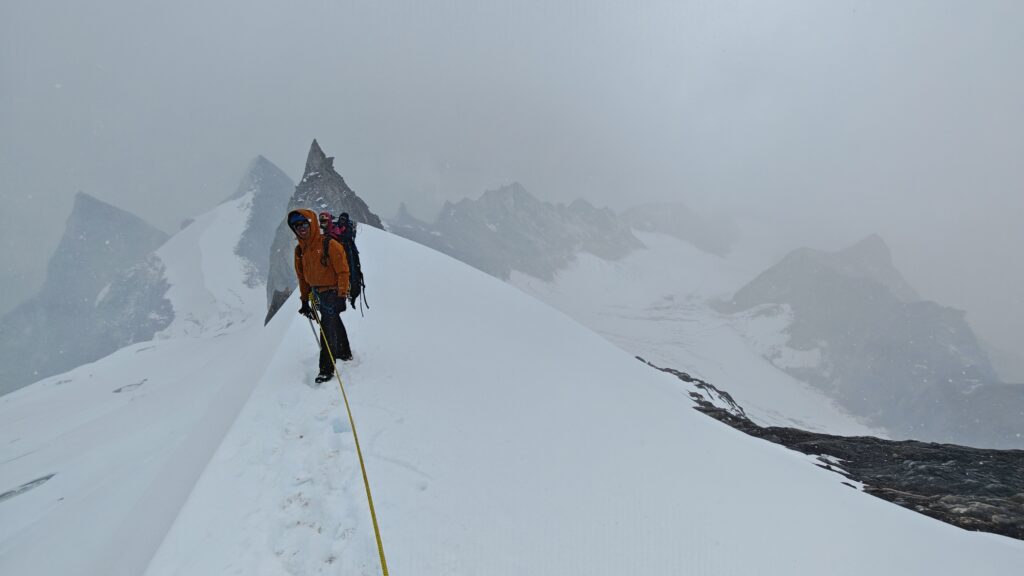
- Glacier travel: The route crosses crevassed glaciers, requiring careful route-finding and teamwork
- Snow and ice slopes: Gradients of 40–50 degrees in sections provide a sustained but manageable challenge
- Summit ridge: The final push involves a narrow snow ridge, often the most exposed and memorable section
- Early alpine start: Summit day typically begins before dawn
Share the Journey
The expedition is designed to build confidence gradually. With the support of experienced guides, a steady pace, and time for acclimatisation, you will gradually find yourself adjusting to both the altitude and the terrain, physically and mentally.
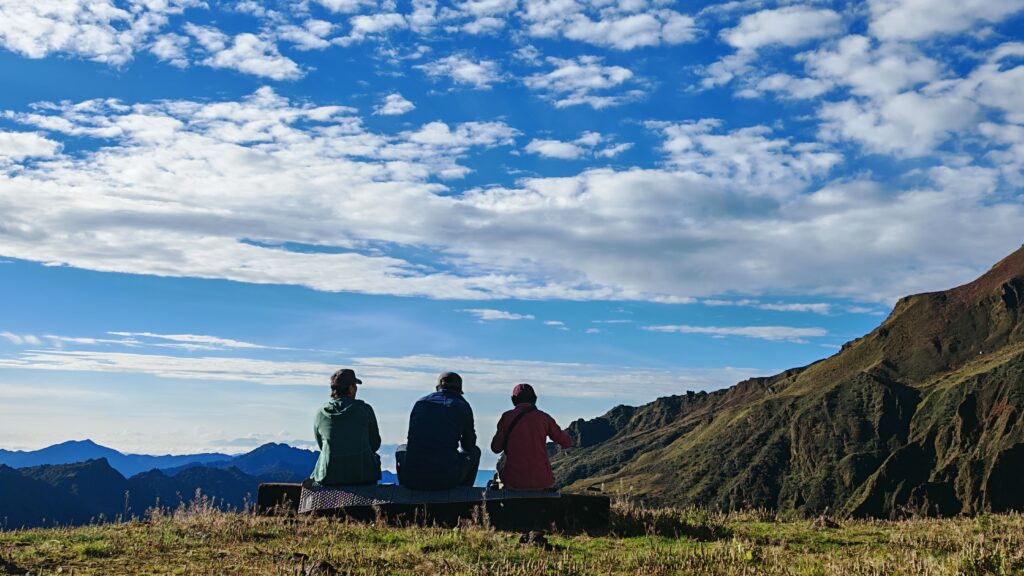
What makes this journey meaningful is sharing it with others. From simple evenings in camp to working together on summit day, you go through each part side by side. In a place that sees fewer trekkers, those shared moments tend to stay with you a little longer. It is more than just reaching a peak. It is a chance to experience a quieter side of Nepal, try something new, and see what you are capable of at your own pace.
Join Us for this Trek and Climb
This trek/climb will be led by Joanne Soo, together with our experienced mountaineering team in Nepal.
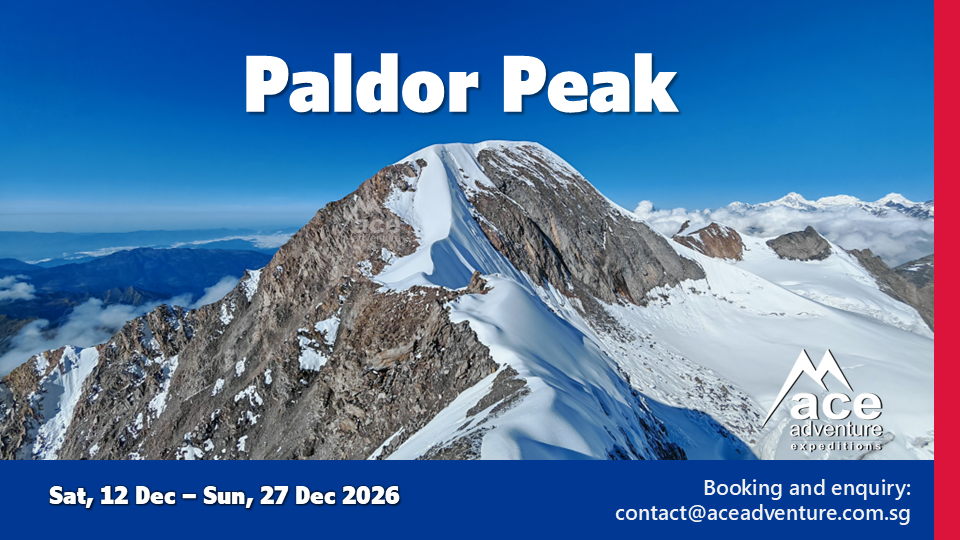
Trip date: Sat, 12 Dec – Sun, 27 Dec 2026
For trip details, email us at [email protected]